Remittances Are Amateur Hour
The Global African Diaspora Sends $95 Billion a Year Back to the Continent. Seventy Percent of It Funds Consumption. The Infrastructure to Change That Is Now Operational.


– 5 min read


The Global African Diaspora Sends $95 Billion a Year Back to the Continent. Seventy Percent of It Funds Consumption. The Infrastructure to Change That Is Now Operational.
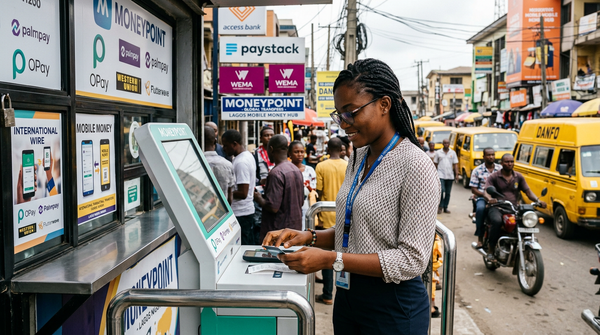
Africa received more than $95 billion in remittances in 2024.
The World Bank projects that figure will reach $105 billion for 2025 based on preliminary flows. Sub-Saharan Africa alone received $56 billion in 2024.
Nigeria's remittance inflows hit $20.98 billion in 2024 — the highest level in five years, representing a 9% year-over-year increase — and rose further to $23 billion in 2025.
Nigeria's personal remittances represented 11.3% of GDP in 2024, up from 5.4% in 2023.
The scale is undeniable.
The problem is structural: approximately 70% of those flows go directly into household consumption — food, education, healthcare. Less than 30% is channeled into any investment vehicle.
The remittance economy has been, by default, a consumption subsidy rather than a capital formation engine.
That architecture is now being dismantled.
Remittances to Africa have grown from approximately $53 billion in 2010 to $95 billion in 2024 — a 79% increase in 14 years, representing a 3.6% to 5.1% expansion as a share of continental GDP.