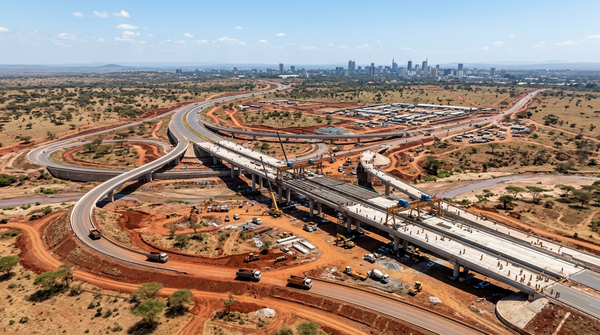
Africa Has a $155 Billion Annual Infrastructure Need. It Also Has a 20% Return Premium.
The OECD models a $65 billion annual gap between current mobilization and what Africa requires. The continent that most needs capital also offers the highest infrastructure returns on earth. The spread exists because the market has not yet been priced correctly.
The number that defines Africa's infrastructure moment is $155 billion
That is the annual investment level the OECD's Africa's Development Dynamics 2025 report — published in November 2025 in partnership with the African Union — identifies as necessary to more than double Africa's GDP by 2040.
The figure is not a development aspiration.
It is a modeled output: invest $155 billion per year in productive infrastructure from now through 2040, and Africa's GDP more than doubles.
Invest at current mobilization levels — approximately $90 billion per year under existing trends — and the gap compounds annually.
The same OECD report identifies the return figure that reframes the entire narrative: infrastructure projects on the African continent can yield returns of up to 20%, among the highest in the world.
Commercial debt in Africa costs at least 2.5 times more than equivalent financing in OECD countries.
Equity costs 1.6 times more.
The $65 billion annual gap between current mobilization and the required investment level is not a development crisis waiting for charity. It is a market inefficiency waiting for capital with the sophistication to price and structure it correctly.
The paradox is direct: the highest-return infrastructure market in the world is simultaneously the most expensive to finance — not because the underlying projects are riskier in cash flow terms, but because the cost of capital is elevated.
Understanding this paradox is the foundation of the investment thesis
Capital that can access African infrastructure returns at concessional or near-concessional borrowing rates — through development finance institutions, blended finance structures, or AfDB co-investment vehicles — captures a spread that does not exist in any other major infrastructure market.