Central Bank Of Nigeria Sets ₦15 Billion Capital Floor For Dollar-Backed Stablecoin Issuers
The CBN's new virtual asset rules require ₦10 billion capital for naira stablecoin issuers and ₦15 billion for dollar-backed issuers, and ban paying yield. The Black Executive Journal — Daily Edition
Policy rate23.00%Central Bank of Nigeria · Sep 2029
Public debt / GDP34.6%IMF · 2026
Dual citizenship allowed with limits (Constitution of the Federal Republic of Nigeria 1999 (as amended to 2023), s. 28)Constitute Project, Nigeria 1999 (rev. 2023) · 1999
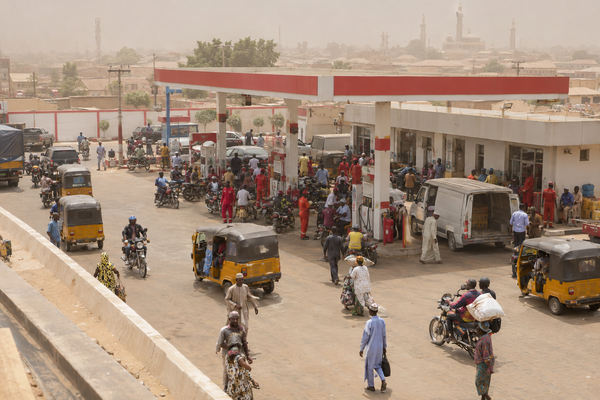
The Central Bank of Nigeria issued its Regulations for the Operations of Non-Security Virtual Assets in Nigeria, dated Nov 5. They license stablecoin issuers, deposit money tokens and virtual asset service providers (Central Bank of Nigeria — Nov 5, 2026).
Issuers of foreign-currency stablecoins need ₦15 billion in minimum paid-up capital, and naira stablecoin issuers ₦10 billion, both on entry and at all times (Central Bank of Nigeria — Nov 5, 2026).
A stablecoin becomes "systemic" once its circulating supply exceeds ₦500 billion for 30 consecutive days or more than 5 million Nigerians hold or use it. Issuers are banned from paying interest or yield to holders (Central Bank of Nigeria — Nov 5, 2026).
US payrolls rose by 165,000 in October, against an average of 48,000 over the prior 12 months. Unemployment was 4.1%, and 6.6% for Black workers (Bureau of Labor Statistics — Nov 6, 2026).
Average hourly earnings rose 0.4% to $38.00. The number of people working part time for economic reasons rose by 339,000 to 4.8 million (Bureau of Labor Statistics — Nov 6, 2026).
IMF staff reached a staff-level agreement with Ghana on the first review of its 36-month Policy Coordination Instrument after a mission that ran Oct 22 to Nov 4 (IMF — Nov 5, 2026).
NIGERIA — Central Bank Of Nigeria Issues Licensing Regime For Stablecoins And Virtual Asset Providers
The Central Bank of Nigeria (CBN) has issued the Regulations for the Operations of Non-Security Virtual Assets in Nigeria, reference PSP/DIR/PUB/CIR/001/004 and dated 5 November 2026. It is the bank's first full regime for licensing stablecoins, bank-issued deposit tokens and the firms that provide services around them.
A Class 1 issuer must hold minimum paid-up capital of ₦10 billion, and a Class 2 issuer₦15 billion, "on entry and at all times," or a higher amount the bank may set. Other licensed activities carry ₦1 billion floors.
Each issuer licence costs ₦10 million to apply for and ₦5 million a year to renew.
Every issuer must be incorporated in Nigeria.
A foreign-currency stablecoin can reach Nigerians only through a Nigerian entity holding a Class 2 licence, and no firm may hold both issuer licences without the CBN's written approval (Central Bank of Nigeria — Nov 5, 2026).
The rules separate the two classes by use.
A Class 1 stablecoin must reference the naira one-to-one and be fully backed by naira-denominated eligible reserve assets. It may be used for payments, settlement and treasury management. A Class 2 stablecoin may be used for cross-border payments and remittances, trading through licensees, international commerce and trade settlement, and holding foreign-currency value.
Using Class 2 tokens for domestic naira obligations or converting them against the naira stays subject to foreign-exchange regulations and anti-circumvention rules on peer-to-peer platforms (Central Bank of Nigeria — Nov 5, 2026).
Prudential limits are tight.
An issuer may not "pay, offer, arrange or facilitate interest, yield, dividends, returns or other financial benefits" to holders. Reserves may not be used for operating expenses, lending, staking or collateral.
The CBN will designate a token systemic if its naira-equivalent circulating supply exceeds ₦500 billion on each of 30 consecutive days, or if more than 5 million people in Nigeria hold or use it, and enhanced supervision follows.
Operating a regulated activity without a licence carries a fine of at least ₦100 million, plus at least ₦1 million for every day the breach continues. The regulations leave the Securities and Exchange Commission's authority over tokens that count as securities unchanged (Central Bank of Nigeria — Nov 5, 2026).
Why It Matters
Nigeria has gone from informal tolerance of dollar stablecoins to a licensing regime with a high capital bar. A ₦15 billion floor shuts out most startups as issuers, so the issuer market will favour banks, large fintechs and well-funded foreign issuers working through a Nigerian entity.
The approved Class 2 uses (remittances, trade settlement and cross-border payments) give diaspora senders and importers a lawful channel.
The yield ban removes the "dollar savings account" model that many wallets have been marketing. Founders should now decide whether to apply for a licence, partner with a licensed issuer or restructure as a VASP under the ₦1 billion tier.
Banks should study the Deposit Money Token provisions as a way to tokenise their own deposits.
UNITED STATES — Payrolls Rise By 165,000 In October As Unemployment Holds At 4.1 Percent
Total nonfarm payroll employment rose by 165,000 in October, well above the average monthly gain of 48,000 over the previous 12 months, the Bureau of Labor Statistics reported. The unemployment rate was little changed at 4.1%, with 7.1 million people unemployed.
Professional and business services added 70,000 jobs, against an average of 15,000 a month. Health care added 42,000, led by hospitals (+16,000) and home health care (+11,000).
Transportation and warehousing added 25,000, including 17,000 couriers and messengers.
Manufacturing rose 19,000 and is up 101,000 since December 2025. Retail, construction, financial activities, leisure and hospitality, and government showed little change (Bureau of Labor Statistics — Nov 6, 2026).
The Black unemployment rate was 6.6%, compared with 3.7% for White workers, 4.7% for Hispanic workers and 2.8% for Asian workers. The number of people working part time for economic reasons rose by 339,000 to 4.8 million, a sign that some workers want more hours than they can get. Participation held at 61.9%.
Average hourly earnings for private-sector employees rose 14 cents, or 0.4%, to $38.00, and are up 3.1% over the year (Bureau of Labor Statistics — Nov 6, 2026).
Why It Matters
Hiring was the strongest in months, but the Black unemployment rate is still almost twice the White rate, and involuntary part-time work is rising.
Black-owned firms in professional services and health care, the two fastest-growing sectors, should expect tighter competition for talent and plan pay budgets around wages rising 3.1% a year.
A 0.4% monthly wage gain gives the Federal Reserve reason to be cautious about further rate cuts, which affects borrowing costs for SME credit lines and commercial real estate refinancing.
GHANA — IMF Staff Reach Agreement With Ghana On First Policy Coordination Instrument Review
An International Monetary Fund staff team led by Ruben Atoyan visited Accra from Oct 22 to Nov 4 and reached a staff-level agreement with Ghana on the first review of its 36-month programme under the Policy Coordination Instrument (PCI) (IMF — Nov 5, 2026).
The PCI is a non-financing arrangement: it gives Ghana IMF monitoring and a policy anchor without new loans, following the programme that came before it. In the end-of-mission statement, staff pointed to strong revenue collections in 2026 and progress on tax administration.
That progress includes the early completion of the review of customs and excise legislation and the ongoing rollout of the Integrated Tax Administration System and electronic fiscal devices.
Staff said that, "building on strong 2026 collections, non-oil revenue is projected to further increase in 2027" (IMF — Nov 5, 2026).
The statement also set reform priorities for the coming months. They include reforming the Bank of Ghana's liquidity management framework and completing the rollout of the integrated tax administration system ahead of the 2027 Budget (IMF — Nov 5, 2026).
The agreement still needs approval by IMF management.
Why It Matters
Ghana has moved from crisis lending to policy monitoring only, which is the step sovereigns take before they return to international markets on better terms. Stronger revenue and a liquidity reform at the Bank of Ghana point to a more predictable cedi and lower domestic borrowing costs.
That matters for importers, banks holding government paper and diaspora investors weighing Ghanaian treasury bills.
Firms selling to the Ghanaian government should watch the 2027 Budget for spending priorities and payment discipline.
Creative Africa Nexus (CANEX) WKND 2026 opened in Lagos on Nov 5.
The event is hosted by the Federal Government of Nigeria and organised by the African Export-Import Bank (Afreximbank), and it brings together creatives, investors, policymakers and business leaders from Africa and the diaspora for four days of deal-making, exhibitions and industry sessions (Afreximbank — Nov 5, 2026).
It runs until Nov 8.
At the opening, Minister of Industry, Trade and Investment Dr Jumoke Oduwole said the government is unlocking more than $600 million in financing for digital and creative enterprises through the Investment in Digital and Creative Enterprises (iDICE) programme, which the Bank of Industry implements.
She said the aim is to ensure "more economic value from the country's cultural exports" stays in the domestic economy (Voice of Nigeria — Nov 6, 2026).
iDICE is also running a deal room at the event to connect investment-ready Nigerian startups and creative businesses with financiers (Voice of Nigeria — Nov 6, 2026).
Why It Matters
Financing for African creative businesses is moving from grants and sponsorship to structured deal flow, through development banks and a government-backed fund.
Founders in film, music, fashion, gaming and digital media should arrive at CANEX deal rooms with audited accounts, clear title to their intellectual property and export revenue forecasts.
Diaspora producers and distributors can use CANEX to find co-production and licensing partners whose financing is backed by Afreximbank and the Bank of Industry.
Disclaimer: This report is for informational purposes only and does not constitute financial advice. Consult a licensed advisor before making investment decisions.
Black Executive Brief editors curate Pulse and Week Ahead briefings for Black executives and investors, focusing on capital, ownership, and infrastructure shaping opportunity across business, policy, and global markets.