Black Executive Journal Launches Connected History on Diaspora Desk Daily
New editorial experience connects Black business history across centuries, industries and continents, bringing the people, enterprises and institutions behind the stories into focus.
Connecting Black and African Business History Across Generations
Connecting Black Business History Across Centuries, Industries and Continents
Black Executive Journal announces the launch of Connected History on Diaspora Desk Daily, a new editorial experience connecting Black business history across centuries, industries and continents.
Bringing together the Yesterday’s Architects history map, dedicated people and place pages, and integrated article panels, the feature gives readers a new way to explore the documented relationships behind generations of Black business.
Dating back centuries, the collection examines the entrepreneurs, family networks, businesses and institutions that shaped commerce and community life. Its initial featured profiles reach into the eighteenth century and extend through the nineteenth, connecting stories of manufacturing, freight and transport, real estate, philanthropy and institution building.
Connected History adds a historical dimension to Diaspora Desk Daily’s contemporary reporting across Africa, the Caribbean and the global Black diaspora.
The initial history collection centers on African American business builders and their documented networks, establishing a foundation for the broader cross-century, cross-industry and cross-continental experience.
History of Black Business Across Centuries
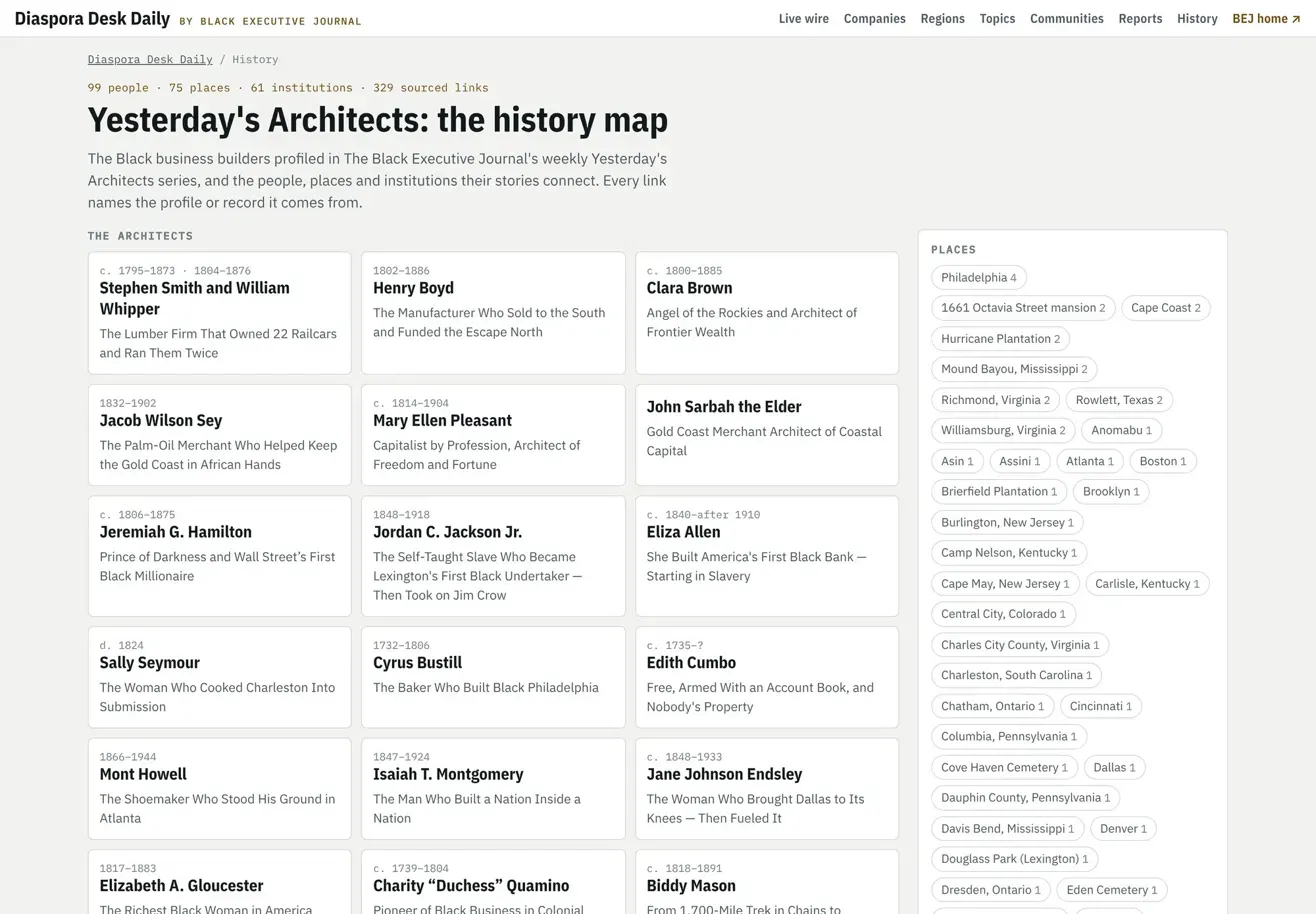
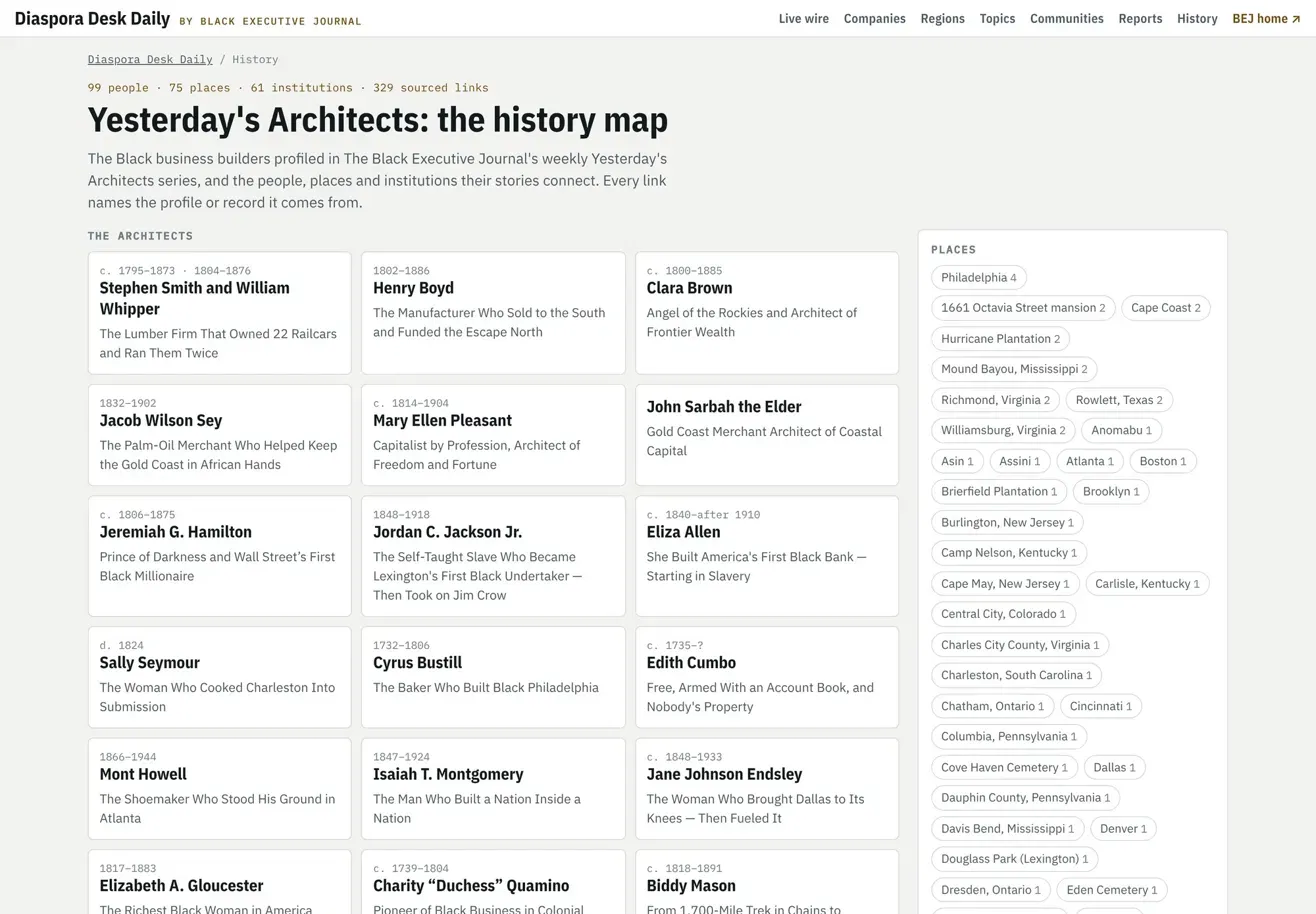
The Yesterday’s Architects history map brings individual biographies into a connected collection. Readers can explore not only what a business builder accomplished, but also the people, places, enterprises and institutions associated with that work.
The initial collection includes 19 people, 13 places, 11 institutions and 56 sourced links. Featured architects include Cyrus Bustill (1732–1806), Stephen Smith (c. 1795–1873), William Whipper (1804–1876) and Henry Boyd (1802–1886).
Their stories provide entry points into themes that run across generations of Black business history: financing freedom, building enterprises, acquiring property, moving goods, supporting education and establishing community institutions.
The map organizes these connections through featured profiles, places and themes.
The Yesterday’s Architects history map connects featured business builders with documented places, institutions and themes. Read more: https://desk.blackexecutivebrief.com/history
People, Industries and Places
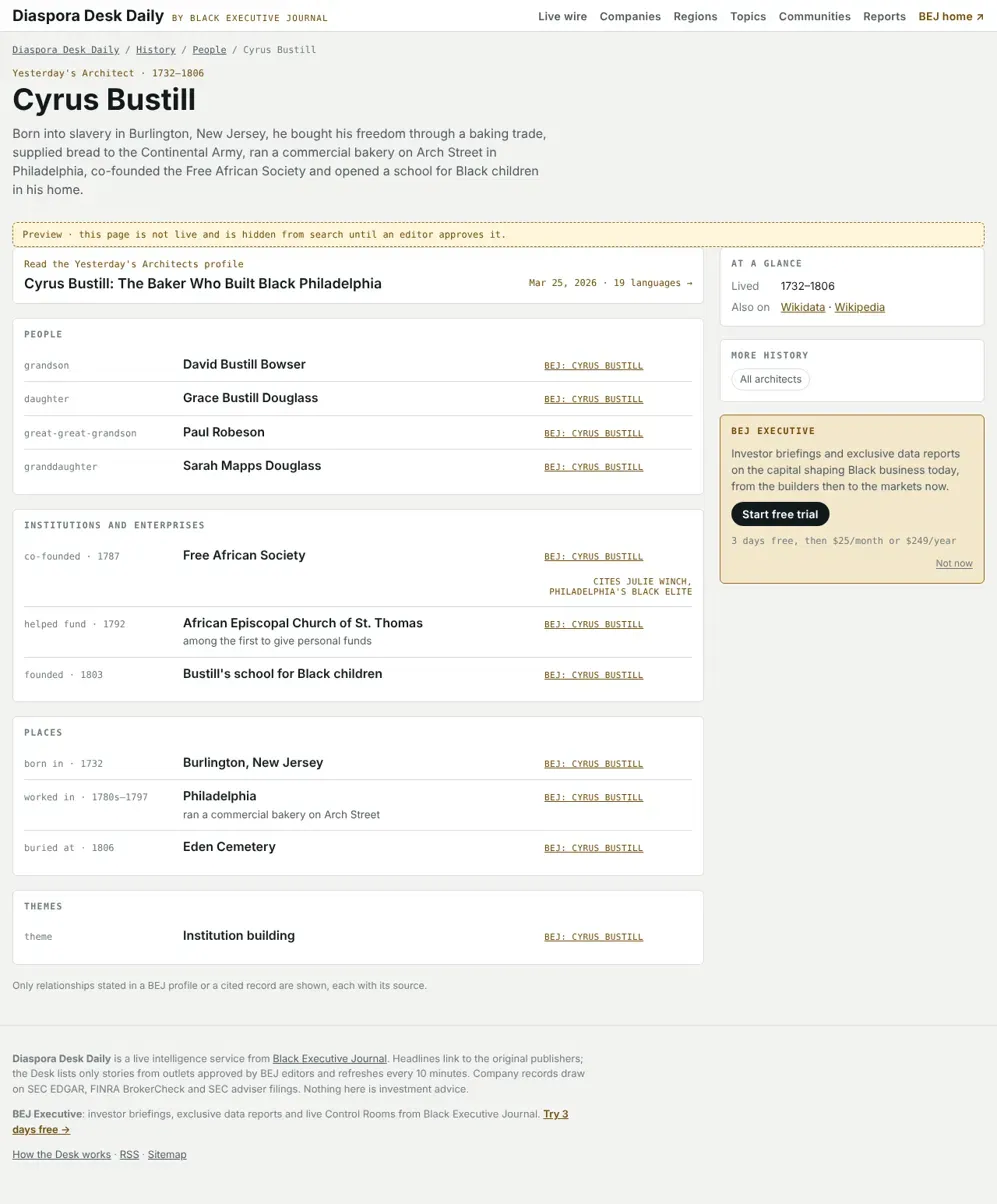
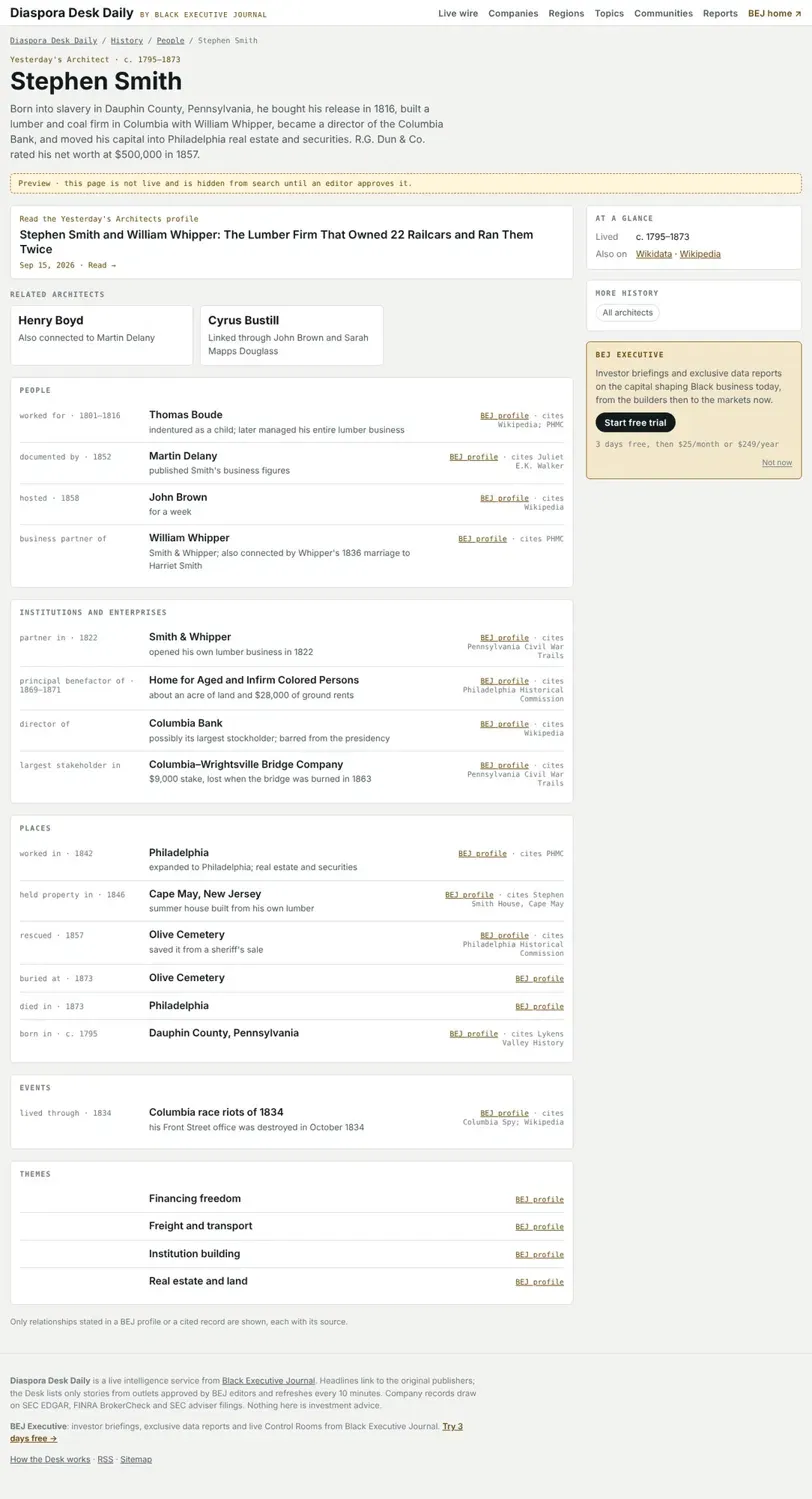
Dedicated person pages bring together biographical context, the original Yesterday’s Architects profile and categorized historical relationships. Dates, explanatory notes and source references help readers understand the nature of each connection.
Cyrus Bustill’s page connects his story with family members including David Bustill Bowser, Grace Bustill Douglass, Sarah Mapps Douglass and Paul Robeson. It also identifies relationships with the Free African Society, the African Episcopal Church of St. Thomas and Bustill’s school for Black children, showing how one profile opens into a wider history of family and institution building.
Stephen Smith’s page brings together connections spanning business partnerships, banking, transport, property and philanthropy. Entries include William Whipper, Smith & Whipper, Columbia Bank, the Columbia–Wrightsville Bridge Company, the Home for Aged and Infirm Colored Persons, and Olive Cemetery.
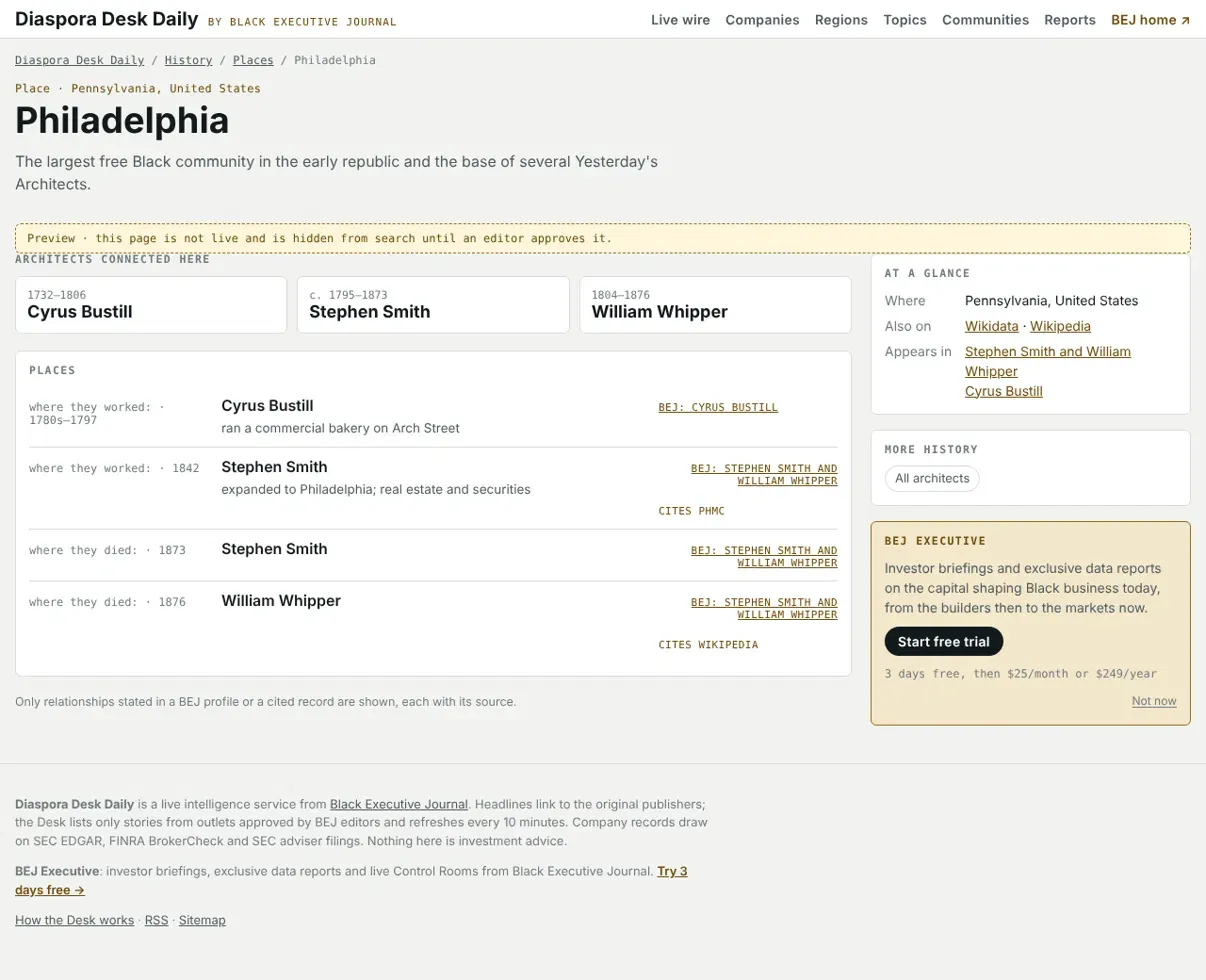
Place pages allow readers to explore where those histories intersect. The Philadelphia page brings Cyrus Bustill, Stephen Smith and William Whipper together through separately documented relationships with the city, while the wider map includes locations in the United States and Canada.
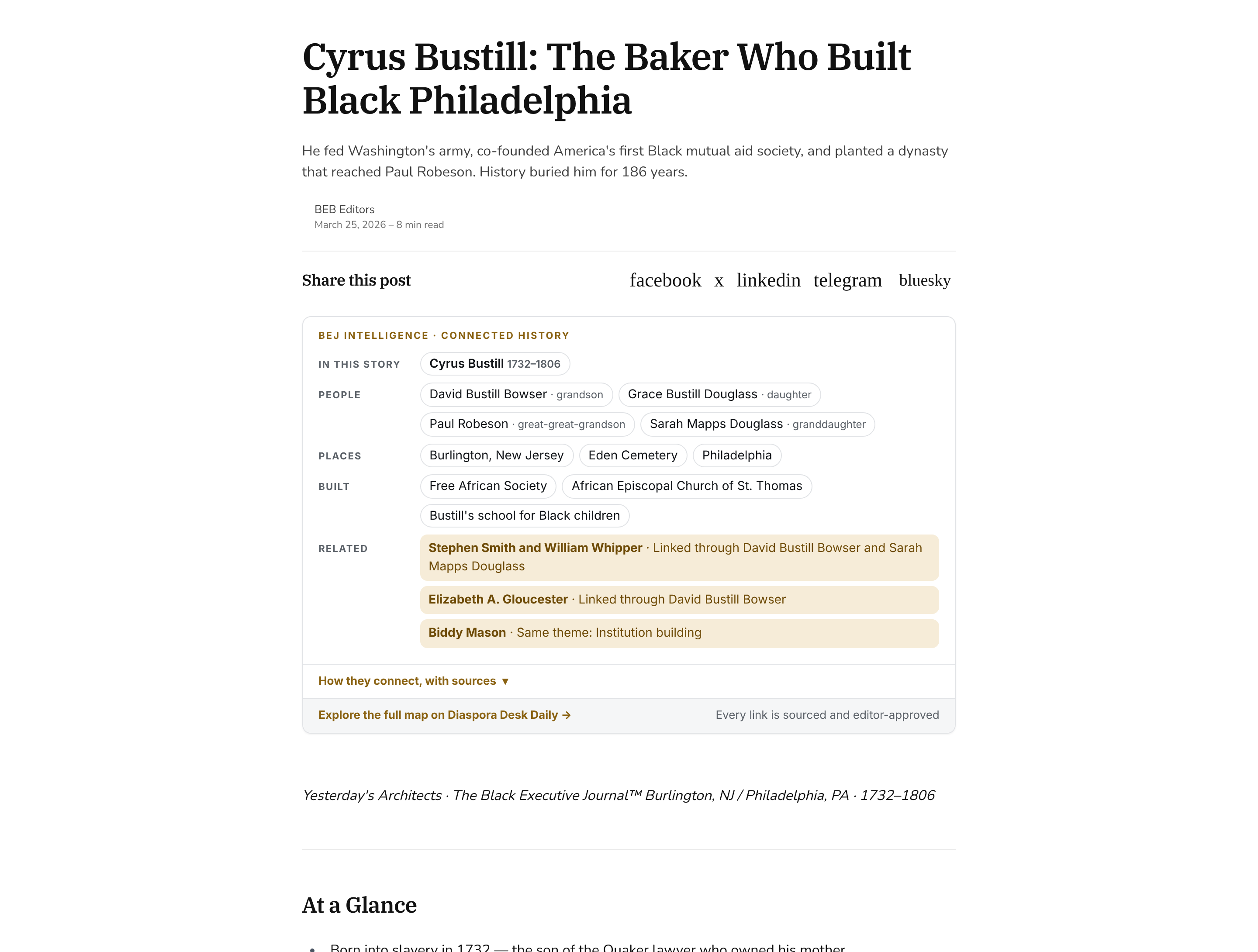
The “BEJ Intelligence · Connected History” panel brings the collection directly into Black Executive Journal’s long-form profiles. It places relevant people, places and institutions alongside the article, giving readers an immediate view of the wider network surrounding its subject.
The panel includes a “How they connect, with sources” control and a link to explore the full map on Diaspora Desk Daily. Its related-story area identifies connections to other profiles and names the people through whom those relationships are linked.
In the Cyrus Bustill example, the panel connects the reader to the Stephen Smith and William Whipper profile through David Bustill Bowser and Sarah Mapps Douglass. The result is a direct path from an individual story into a broader historical collection.
The Connected History panel integrates people, places, institutions and related profiles into the long-form reading experience. Read more: https://desk.blackexecutivebrief.com/historyLK
Sourced Connections, Broader Discovery
Connected History is grounded in source attribution. Only relationships documented in a BEJ profile or a cited record are included, with each connection identifying its source. Readers can follow those references back to the material supporting the entry.
The feature complements Diaspora Desk Daily’s live business intelligence service, which draws reporting from 204 approved outlets and refreshes every 10 minutes. Headlines link to the original publishers, while the service provides navigation across companies, regions, topics, communities and reports.
Black Executive Brief editors curate Pulse and Week Ahead briefings for Black executives and investors, focusing on capital, ownership, and infrastructure shaping opportunity across business, policy, and global markets.