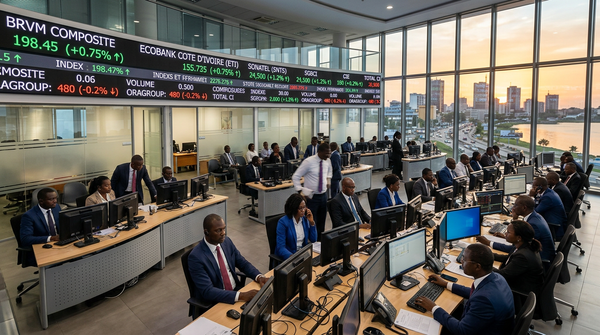
The $1.25M Tax Deadline Everyone's Ignoring
Plus: The Underpricing Trap & Record Small Business Lending | Wednesday, December 17, 2025

– 6 min read

Plus: The Underpricing Trap & Record Small Business Lending | Wednesday, December 17, 2025
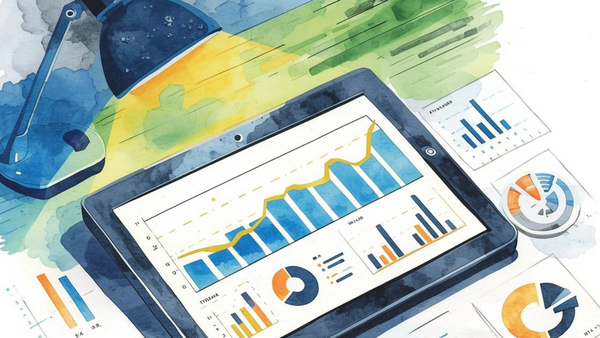
You have fourteen days left to deploy one of the most powerful tax deductions available to freelancers and small business owners.
Section 179 allows you to deduct the entire cost of qualifying equipment, software, and machinery in the year you purchase it—not spread over years of depreciation.
For 2025, the limit is $1,250,000.
If you need a new laptop ($2,500), camera equipment ($8,000), office furniture ($5,000), or a vehicle over 6,000 lbs GVWR, buying it before December 31 means you deduct the full amount on your 2025 tax return.
Waiting until January 2, 2026 means you lose that deduction entirely for 2025.
If you’re in the 24% federal tax bracket, a $15,000 equipment purchase translates to $3,600 in tax savings this year.
Next year, the same purchase gives you roughly $300-600 in year-one depreciation.
That’s a $2,400–$3,300 opportunity cost for waiting 3 days.
You must not only purchase the equipment—you must place it into service (i.e., it must be operational) by December 31.
Buying equipment on Dec 30 that sits in a box unopened?
The IRS won’t allow it.
The One Big Beautiful Bill (OBBBA) made bonus depreciation 100% permanent for qualifying property purchased after January 19, 2025.
This is a historic change that will likely expire in 2027, so 2025 is a prime year to capitalize.
Sources:
While headlines scream recession warnings, capital is actually flowing to Main Street at unprecedented levels.
In Fiscal Year 2025 alone, the SBA approved $45 billion in loans for 85,000 small businesses—the most in the agency’s entire history.
That’s capital deployment at scale.
Holiday spending is projected to surpass $1 trillion for the first time ever, with growth between 3.7% and 4.2%.
Nearly 203 million Americans shopped over Thanksgiving weekend—the highest turnout on record.
If you’ve been sitting on a growth idea—hiring, equipment, inventory expansion—the lending environment is historically favorable.
SBA loans are structured to give solo operators and small teams access to capital at lower rates than traditional banks.
Holiday season approvals are slower due to staffing, but application windows are open.
If you submit an SBA loan application this week, you’ll be in the queue for January processing when lenders resume normal speed.
Sources:
Most operators are unaware of a seasonal, predictable cash flow crisis that hits every December: the Winter Payment Effect.
According to the 2024 Federal Reserve Report, over 40% of small businesses face slower payments in the fourth quarter.
This isn’t random.
It’s systematic.
If you send an invoice on Dec 28, expect payment on January 15+ instead of the normal 30-day window.
For operators running lean cash flow, this 45-day gap can create a serious crunch.
Sources:
Most operators overpay for accounting software they only use 10% of. Wave handles the essential invoice-and-track workflow with zero cost.
The Tool: Wave
Cost: Completely Free
The free tier has zero limits on invoices, clients, or transactions. You only pay if you need automated payroll processing (which most solo operators don’t).
Sources:
You set your rates low to “get clients in the door.” You tell yourself you’ll raise prices next year.
Next year never comes.
In November 2025, a net 34% of small business owners raised their prices—the highest reading since March 2023—to offset inflation.
Yet most operators who underpriced early never caught up.
Raising prices is psychologically hard. You fear losing clients.
You worry customers will complain.
Meanwhile, your costs keep rising (software, payroll taxes, contractor rates), and your margin quietly shrinks.
If you charged $75/hour in 2023 and inflation has eroded your purchasing power by 12% since then, you now need to charge ~$84/hour just to maintain the same real income.
But most operators still charge $75, telling themselves “the market won’t bear it.” Meanwhile, they’re slower.
They’re more stressed.
And they attract price-sensitive clients who don’t value quality.
You’re not greedy for raising prices. You’re responsible.
Underpricing attracts needy clients, kills your margins, and burns you out.
Fair pricing attracts respectful clients and allows you to actually make money.
The math is simple.
The psychology is hard.
Sources:
The new 1099-NEC filing deadline for the 2025 tax year (two days earlier than the traditional January 31, which fell on a weekend).
The IRS will not grant extensions.
If you hired any independent contractors and paid them $600 or more during 2025, you must file by this date or face IRS penalties.
Note: The $600 threshold is only in effect through 2025. Starting in 2026, the threshold increases to $2,000.
Pull your contractor payment records. Compile names, SSNs/EINs, and 2025 payment amounts.
Give this list to your accountant or payroll processor immediately so they can file by Feb 2.
Sources:
Rest up. We operate at dawn.
Thanks for reading The Operator Brief! This post is public so feel free to share it.
Section 179 Expensing Deadline: December 31, 2025 - Balboa Capital
OBBBA Tax Changes: Permanent Bonus Depreciation - GT Law
SBA Record Lending & Small Business Confidence - SBA/LearnCRA
Year-End Accounting Close Timeline - Upflow & BILL
Federal Reserve: 40% of Small Firms Face Q4 Payment Delays - Gateway Commercial Finance & Reddit
ACH Payment Processing Delays During Holidays - First Citizens Bank