Yesterday's Architects · The Black Executive Journal™ Charleston, South Carolina · Active 1795–1824 · Culinary Enterprise, Training & Institution Building
At a Glance
- Born into slavery in Charleston; enslaved by planter Thomas Martin, who fathered her children and controlled her labor for decades
- Trained in French pastry technique by Adam Prior — one of only two French-trained chefs in Charleston — while still enslaved
- Manumitted in 1795; immediately opened a pastry shop at 80 Tradd Street and chose her own name for the first time
- Purchased the building outright in 1802 — a free Black woman owning commercial property in the heart of antebellum Charleston
- Ran the most prestigious catering operation in the city for 29 years; her table hosted the St. Cecilia Society, the Mutton Chop Club, and the city's most powerful white men
- Employed between six and nine enslaved workers at any time — a documented and morally complex reality that must be held alongside her achievements
- Left an estate valued at more than $1,600 at her death in 1824, plus a business, a building, and a culinary dynasty
- Trained scores of cooks whose slave sale advertisements still referenced her name three decades after her death — "brought up by Sally Seymour" was a premium price descriptor in Charleston's human market
- Her daughter Eliza Seymour Lee inherited the business, expanded it, and trained Nat Fuller — the man who catered the first interracial dinner celebrating the end of the Civil War in 1865
She chose her own name in 1795
For however many years she had lived before that — born into slavery in Charleston, South Carolina, her exact birth date unrecorded, her origins documented only in relation to the man who owned her — she had been known by whatever Thomas Martin called her.
Sally.
The cook.
The mother of his children.
In 1795, when Martin signed her manumission papers, she walked out of his household and onto Tradd Street and named herself Sally Seymour. That act of self-naming was the first business decision of her free life.
It would not be the last.
By the time she died on April 3, 1824, Sally Seymour had built the most prestigious culinary enterprise in Charleston — a city that considered itself the capital of American fine dining.
She had fed the city's most powerful white men at her table, trained a generation of Black cooks whose names and hers became permanently entangled in the city's culinary memory, passed a going concern to her daughter, and left an estate that testified to three decades of disciplined commercial operation.
She had done all of it as a free Black woman in the antebellum South, in a city where the architecture of racial control was more elaborate and more brutally enforced than almost anywhere else in America.
Her story does not resolve cleanly.
It never could have.
But it belongs in the record — completely, honestly, and at the level it deserves.
What Bondage Taught Her
Born into slavery, Seymour was the cook and sexual partner of planter Thomas Martin. The language is plain because the reality demands plainness.
What passed between Martin and Seymour was not a relationship in any meaningful sense — it was the exercise of ownership over a woman's body and labor that the law of South Carolina permitted and protected.
That he fathered her children, that he eventually freed her, that he arranged her professional training — none of this redeems the structure.
It is simply what happened.
During the late 1780s, when she oversaw Martin's house and kitchen, she had been trained in Parisian culinary art by Adam Prior, one of Charleston's two pastry cooks.
Prior was a Londoner whose skills were formidable enough that his shop advertisements in the Charleston Morning Post listed rich cakes, French pies, patties, trifles, every kind of cut-pastry, jellies, and hot meat pies of all kinds.
Under Prior's tutelage, Seymour learned how to prepare delicate sauces, braise meats, bake a range of savory breads, and prepare delicate puff pastry.
She absorbed everything he knew.
Then she surpassed him.
These were precisely the things that Sally Seymour mastered, eclipsing her teacher in public favor. This is not a minor detail. Adam Prior was among the most technically accomplished food professionals in the city.
Seymour studied under him while still enslaved, under conditions where her labor and her person belonged to someone else.
She used what she learned to build something that outlasted both of them.
80 Tradd Street: The Business She Built
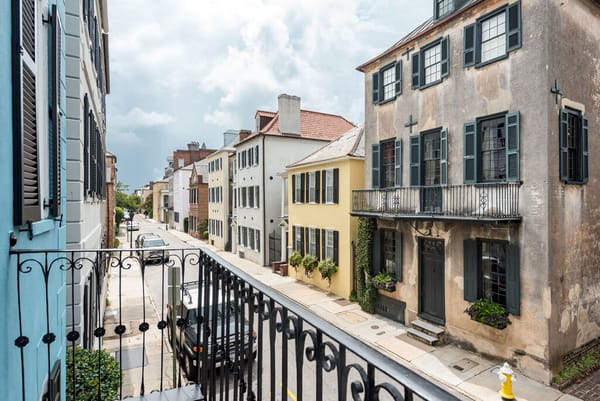
In 1795, Martin manumitted her, and as a free woman of color, she set up a cook shop at 80 Tradd Street under the name Sally Seymour, which she chose for herself.
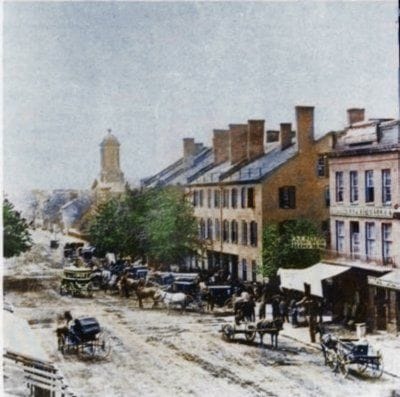
Tradd Street ran through the heart of Charleston's business district — this was not a marginal address.
It was a declaration of commercial intent in the most visible part of the city.
The early years required everything she had.
Two of Seymour's children worked alongside her baking pies, cakes, trifles, and other pastries as they built up not only a reputation but also capital needed to invest in their own enslaved workforce.
In 1802, seven years after opening, she made the purchase that converted her from tenant to owner: she bought the building. A free Black woman, in Charleston, South Carolina, in 1802, owned the commercial property from which she operated her business.
The legal and social obstacles that represented were not minor. She cleared them.
For 29 years, Seymour's was the temple of gustatory pleasure in the city. The clientele reads like a roll call of antebellum Southern power. Thomas Grimké, Charles Cotesworth Pinckney, and Thomas Pinckney convened the Mutton Chop Club every fortnight at Seymour's restaurant.
These were not minor figures — Pinckney had been a delegate to the Constitutional Convention and a Revolutionary War general.
In 1817, the St. Cecilia Society held their meeting in her establishment — the oldest and most exclusive private social organization in America, founded in 1762, admitting only Charleston's most elite white families.
They met at Sally Seymour's table.
This is the paradox at the center of her story: she built her enterprise by making herself indispensable to the very class of men who had built their fortunes on the system that had enslaved her.
She did not do this naively.
She did it deliberately, and she did it better than anyone else in the city.
The Complexity She Carried
A formerly enslaved person, she became an enslaver herself and used enslaved labor in her staff: she enslaved between six and nine people in her kitchen at any time between 1805 and 1824.
In 1804, Seymour purchased a young woman named Chloe to work in the pastry shop and eventually had six enslaved pastry cooks — Chloe, Felix, Peter, Betsey, Liddy, and Laura — assisting at her establishment.
Felix was purchased for $800 in 1814.
These are documented transactions, not allegations.
This is where the historical record demands honesty that neither sanitizes nor flattens. When asked about Seymour owning enslaved people, culinary historian Kevin Mitchell, who wrote his master's thesis on Charleston's freed and enslaved cooks, noted that because of the labor market in Charleston at that particular time, those were the only people available to her.
That structural context is real.
It does not erase the names of those six people.
Chloe.
Felix.
Peter.
Betsey.
Liddy.
Laura.
They are part of this record too.
In addition to staffing her kitchen, Seymour purchased enslaved people, trained them in the art of pastry baking, and resold them. Enslaved cooks trained by Seymour were in such demand they were marketed by private auction rather than public sale.
Wealthy Charlestonians also sent their enslaved kitchen workers to Seymour for training, almost certainly paying her for the instruction.
She had built a culinary training institution — and like nearly every other institution in antebellum Charleston, it operated inside the architecture of slavery.
A complete account of Sally Seymour requires holding both realities simultaneously: the extraordinary achievement of a free Black woman who built a commercial empire under conditions designed to prevent it, and the documented fact that she used enslaved labor and the slave market to do it.
History rarely gives us clean heroes.
What it gives us, when we look honestly, is the full weight of what people were capable of — and what the systems they lived inside required of them.
The Training Empire
The most durable part of what Seymour built was not the building or the business. It was the knowledge she put into other people's hands.
Seymour's influence was entirely more profound than as simply a provisioner of fine foods. She trained a generation of African American men and women in the art of pastry cooking.
For this reason, Charleston cooked vegetables in the French style — with delicacy — and balanced flavor in dishes, approaches visible in Sarah Rutledge's cookbook The Carolina Housewife.
Between 1823 and 1853, twelve slave sale advertisements for enslaved cooks include reference to training under her tutelage.
Descriptors include "served time with Sally Seymour," "served a full apprenticeship to Sally Seymour," and even three decades after her death, an advertisement appeared in the Charleston paper for a "first rate Meat and Pastry cook brought up by Sally Seymour."
Her name, used in a slave sale advertisement to command a higher price, is a grotesque kind of legacy — but it is also irrefutable evidence of her professional standing.
The market valued what she had taught.
Some of the people she taught included Camilla Johnson, Eliza Dwight, Martha Gilchrist, Cato McCloud, and the Holton sisters — who became rivals of Seymour's business.
She trained her own competition and kept winning anyway.
Her greatest pupils were her children. Seymour was the preferred instructor for young enslaved house servants, which made her the matriarch of an elite culinary dynasty in the city.
When she died in 1824, she left the Tradd Street business to her daughter Eliza. Eliza Seymour Lee presided over a catering office and café on Tradd Street, inherited the business from her mother, and became one of the most prominent culinary figures in Charleston for the next five decades.
Eliza's most significant apprentice was Nat Fuller — who in 1865 catered the first interracial dinner in Charleston celebrating the end of the Civil War.
The line from Sally Seymour's kitchen to that table runs straight.
What She Left Behind
By the time of her death in 1824, Seymour left an estate worth in excess of $1,600.
In a city where free Black people faced constant legal pressure, property seizure, and the ever-present threat of re-enslavement through debt or legal maneuvering, an estate of that value — plus a commercial building on Tradd Street, plus a going business — represented an extraordinary accumulation.
She had converted 29 years of culinary excellence into lasting material wealth and passed it intact to the next generation.
The dynasty she founded persisted.
Her daughter Eliza ran the Tradd Street operation until the Civil War.
Some accounts suggest that Eliza Lee's sons, who migrated north after the war, carried their grandmother's recipes with them — including a savory pickles and preserves recipe that became so celebrated Henry Heinz eventually acquired the rights to it, with some researchers tracing a connection to what became Heinz 57 Sauce.
This specific claim remains unverified by primary documents and should be treated as family and local oral history rather than confirmed fact — but its persistence in the record speaks to how deeply Seymour's culinary influence embedded itself in the culture.
What is documented: her name appears in Charleston's culinary record for three decades after her death as the standard against which trained cooks were measured.
That is not myth.
That is market data.
What Her Life Teaches
Skill acquired under bondage still belongs to the person who holds it
Thomas Martin arranged Sally Seymour's training under Adam Prior as an investment in his own household's prestige. The skill it produced went with her when she walked out his door.
No manumission document, no property transfer, no legal instrument can strip a person of what they have learned.
For enslaved people across the antebellum South, professional expertise was the one asset that could not be seized — and Seymour used it to build everything else.
Commercial real estate is the conversion of income into permanence
Seymour spent her first seven years as a free woman building revenue and reputation at 80 Tradd Street. In 1802 she converted that revenue into ownership of the building itself.
That single transaction changed the nature of her enterprise from a business that could be displaced to one with a fixed foundation.
Every entrepreneur operating in a hostile environment should understand this sequence: earn first, own second, compound from there.
Training others is a business model, not a charity
Seymour ran what amounted to a culinary training institution — charging, directly or indirectly, for the expertise she passed on, and building a professional network that extended her commercial influence far beyond her own kitchen.
The cooks who trained under her became walking advertisements for her standards. Her name in a sale advertisement added dollars to the price.
She monetized her knowledge at every point in the chain.
Complexity is not a disqualification from historical recognition
Sally Seymour enslaved people. She operated inside and profited from the system that had enslaved her. A publication committed to honest Black business history cannot look away from that — and it cannot use it to erase the rest of what she built.
The history of Black entrepreneurship under slavery and in its immediate aftermath is not a story of clean moral victories.
It is a story of people making consequential decisions inside brutal systems.
Seymour's full story, told completely, is more instructive than a sanitized version would ever be.
Dynasty is transferred through knowledge, not just capital.
The estate Seymour left her daughter was valuable. The business was more valuable. The training, the recipes, the professional network, the name recognition — those were the most valuable of all.
Eliza Seymour Lee didn't just inherit a building.
She inherited the most recognized culinary brand in Charleston.
That brand outlasted the building, outlasted the business, and kept producing returns for half a century after Sally Seymour died.
Yesterday's Architects is a biographical series by The Black Executive Journal honoring the Black and African entrepreneurs, executives, and innovators who laid the foundation before us — the dealmakers, the institution founders, the strategists who created industries and wealth across the diaspora when the odds were designed against them.
For Further Study
The most rigorous scholarly treatment of Seymour's world is Amrita Chakrabarti Myers' Forging Freedom: Black Women and the Pursuit of Liberty in Antebellum Charleston (University of North Carolina Press, 2011).
David S. Shields' The Culinarians: Lives and Careers from the First Age of American Fine Dining (University of Chicago Press, 2017) covers Seymour and the Charleston culinary dynasty in close detail, as does his 2013 Charleston Magazine feature "Charleston's First Top Chefs," available online.
The Lowcountry Digital History Initiative at the College of Charleston maintains an excellent exhibit, "Nat Fuller's Feast," which traces the Seymour-Lee culinary lineage from Sally through Eliza to Fuller and beyond. Kevin Mitchell's master's thesis, "From Black Hands to White Mouths: Charleston's Freed and Enslaved Cooks and Their Influence on the Food of the South" (University of Mississippi), is the primary academic work on this specific lineage.
Larry Koger's Black Slaveowners: Free Black Slave Masters in South Carolina, 1790–1860 (University of South Carolina Press, 1995) provides essential context for understanding Seymour's use of enslaved labor.
Seymour's BlackPast.org biography, authored by Dr. Kelly Sharp of Furman University, is the most accessible and rigorously sourced short account available online.