

Black Farmers Take Federal Government to Supreme Court + Ghana Launches Africa's $1B AI Hub—Two Battles Defining 2025
Black Farmers Association rejects Trump's $12B program as "racist," plans Supreme Court challenge. Meanwhile, Ghana + UAE announce Africa's largest AI hub | Friday, December 19, 2025
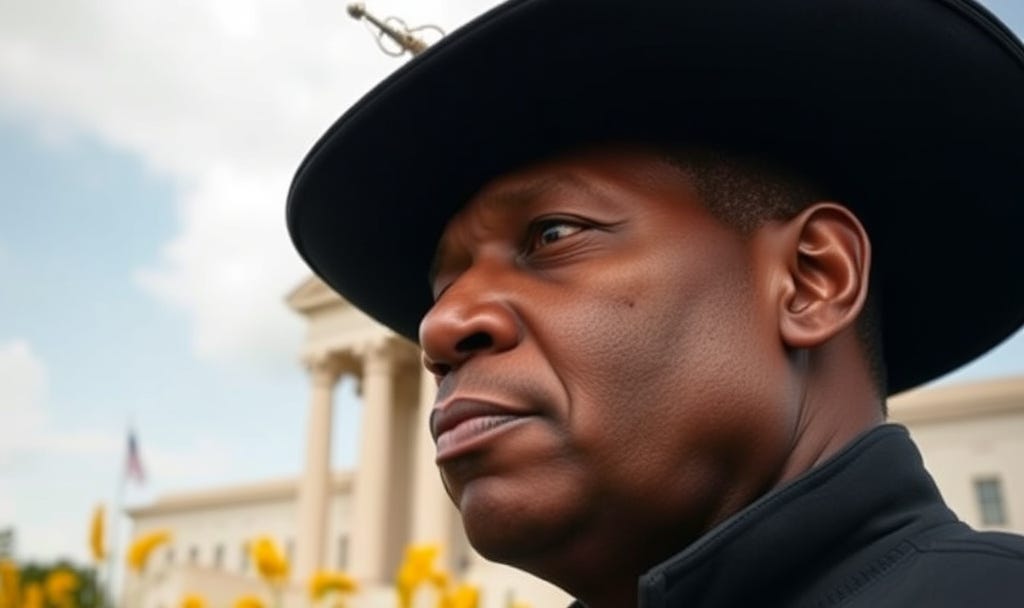
Two stories moving today define the stakes for Black American and African business leaders.
First: Black farmers are fighting back.
The Black Farmers and Agriculturalists Association rejected Trump’s $12 billion Farmer Bridge Assistance Program today, calling it “racist” for excluding the tobacco, sugarcane, peanuts, and livestock crops that majority-Black farmers produce.
The BFAA is planning a Supreme Court case—not just about this payout, but about 30+ years of systematic USDA discrimination that stripped 20 million Black-owned acres down to nearly nothing.
Second: Ghana and the UAE are building Africa’s economic future.
A $1 billion innovation and AI hub launching in Ningo-Prampram will attract 11,000+ tech companies and create 100,000 jobs in AI, cybersecurity, and data science. Meanwhile, South African fintech Ezeebit just raised $2.05M to rebuild African payments for crypto holders and merchants.
These aren’t sideline stories.
They define the terrain for Black entrepreneurs right now.
Here’s what’s happening.
TOP STORIES
Black Farmers Reject $12B Federal Program—Supreme Court Challenge Imminent Over Systemic USDA Discrimination
The Black Farmers and Agriculturalists Association (BFAA) rejected the Trump administration’s $12 billion Farmer Bridge Assistance Program today, calling it “racist” for structurally excluding Black farmers and signaling plans to escalate the fight to the Supreme Court.
What the Program Offers (and What It Excludes)
The USDA announced on December 8 that $11 billion of the $12B would support row crop farmers producing: barley, chickpeas, corn, cotton, lentils, oats, peanuts, peas, rice, sorghum, soybeans, wheat, canola, crambe, flax, mustard, rapeseed, safflower, sesame, and sunflower.
The exclusions that triggered the BFAA rejection
Tobacco (excluded)
Sugarcane (excluded)
Livestock (excluded)
Pork (excluded)
Why This Matters
Thomas Burrell, president of the BFAA, outlined the systemic discrimination:
“The majority of these excluded crops—tobacco, sugarcane, peanuts, pork, and livestock—are farmed by Black Americans. This program was designed to benefit row crop farmers, predominantly white operations. Meanwhile, Black farmers who’ve already been systematically dispossessed are being excluded again.”
The Historical Context
Burrell emphasized:
“In 1910, Black Americans owned 20 million acres of land. Today, that number has declined dramatically due to discriminatory USDA practices, unfair lending policies, and predatory land seizures. The USDA itself was the instrument of that dispossession.”
The Legal Theory
Burrell articulated the constitutional issue directly:
“If the Constitution was used to deprive African American farmers of congressional reparations for racial discrimination by the USDA, how can the same agency—the USDA, under presidential discretion—now give money to this group of farmers, excluding those same victims of racial discrimination? That’s a civil rights violation at the core.”
Additional Barriers Black Farmers Face
Beyond the crop exclusions, the BFAA cited a second structural barrier:
“Many Black farmers have faced challenges accessing USDA programs that require enrollment or acreage reporting with USDA offices. The agency has a documented history of steering Black farmers away from programs, making application itself an obstacle.”
The Supreme Court Filing
Burrell made the filing intention clear to Fox13 Memphis:
“We’re going to have to go again to the highest court of the land. This is not just about this single payout. This is about 30+ years of documented USDA discrimination against Black farmers. We’re prepared to argue this case all the way.”
Why It Matters
This isn’t a subsidy dispute. It’s a civil rights case that goes to the heart of systematic wealth dispossession.
The BFAA is arguing that:
The USDA systematically discriminated against Black farmers (well-documented)
That discrimination stripped Black farmers of generational land wealth
That the current program, by design, continues to exclude the crops farmed by those same victims
That constitutional equal protection prevents the government from using discretion to exclude discrimination victims from relief
The Precedent
If the BFAA succeeds, it could open a pathway for Black farmers nationwide to claim systemic USDA discrimination as grounds for either inclusion in relief programs or direct reparations.
The case will likely turn on:
Whether the government’s crop selection was intentional discrimination or “neutral” policy that had disparate impact;
Whether the BFAA can prove documented USDA discrimination going back 30+ years;
Whether equal protection law requires inclusion of historically excluded groups in remedial programs.
Ghana + UAE Launch Africa’s $1 Billion Innovation and AI Hub—100,000 Jobs, 11,000 Tech Companies, AI Research for Healthcare + Agriculture
Ghana and the United Arab Emirates officially signed a $1 billion Memorandum of Understanding to build the Ghana-UAE Innovation and Technology Hub in Ningo-Prampram, positioning the facility as Africa’s largest AI and emerging tech center and a strategic base for global tech companies entering the continent.
The Scale
Total Investment: $1 billion
Land: 25 square kilometers (fully funded by UAE’s Ports, Customs and Free Zone Corporation (PCFC); land provided by Ghana government)
Location: Ningo-Prampram, east of Accra
Expected Tech Companies: 11,000+ global firms (Microsoft, Meta, Oracle, IBM, Alphabet, Google)
Job Creation Target: 100,000 jobs in AI, cybersecurity, data science, and knowledge work
Timeline: Construction 2026-2027; operations 2027+
Core Focus Areas
Artificial Intelligence Engineering: Developing machine learning and AI solutions tailored specifically for African challenges (agriculture optimization, healthcare diagnostics, financial services, supply chain management)
Business Process Outsourcing (BPO): Call centers, customer support, and administrative services leveraging Africa’s talent and lower cost base
Knowledge Process Outsourcing (KPO): Research, data analytics, software development, and higher-value knowledge work for global enterprises
Infrastructure & Facilities
Research and development labs
Startup incubators and accelerators
Digital skills training academies
Data centers and cloud infrastructure
Corporate headquarters and offices for multinational tech companies
Strategic Rationale (From Ghana Officials)
Minister Samuel Nartey George emphasized the connection to existing initiatives: “This hub builds directly on Ghana’s One Million Coders Programme, positioning Ghana as a talent pipeline for AI and tech innovation. We’re not just attracting companies—we’re creating an entire ecosystem where Ghanaian developers, engineers, and entrepreneurs can build globally competitive products.”
Regional Impact
The hub positions Ghana as the bridge between Africa, the Middle East, and Europe—leveraging its existing role as a regional tech leader (home to Google’s AI research center in Accra).
This creates a competitive advantage over Nigeria, Kenya, and South Africa for attracting multinational tech investment.
Market Validation
The $1 billion commitment from UAE’s PCFC (backed by Dubai’s free zone expertise and international business experience) signals institutional confidence that Africa’s tech talent and market opportunity can sustain world-class innovation infrastructure.
Why It Matters
This hub represents a fundamental shift: African governments are no longer waiting for Silicon Valley to invest in Africa’s future.
Instead, they’re mobilizing regional and international capital to build infrastructure that positions African tech talent as a strategic asset for global companies.
For diaspora entrepreneurs and investors: the hub creates immediate opportunities in:
Infrastructure and facility management
Staffing and talent recruitment for multinational tech companies
Real estate development and commercial space creation
Professional services (legal, accounting, HR, consulting)
Educational and training services (bootcamps, certifications)
For African founders: the hub creates proximity to global tech companies and multinational investment, plus access to venture capital, mentorship, and enterprise customer relationships that are typically concentrated in Silicon Valley or London.
MARKET WATCH
Ezeebit Raises $2.05M to Rebuild African Payment Infrastructure for Crypto Holders
South African fintech Ezeebit secured $2.05 million in seed funding led by Raba Partnerships and Founder Collective to scale stablecoin and cryptocurrency payment infrastructure across South Africa, Kenya, and Nigeria.
The Problem Ezeebit Solves
African merchants face an acute market gap: consumers increasingly hold cryptocurrency for remittances and savings, but lack compliant, accessible ways to spend it.
Meanwhile, traditional payment rails are prohibitively expensive (2-3% card fees) and slow (3-5 day settlement).
Ezeebit bridges this gap by converting crypto payments into instant stablecoin settlement with next-business-day fiat payouts.
Key Metrics
Fees: 1% or less (68% cheaper than traditional card payment fees)
Settlement: Instant stablecoin settlement + next-business-day fiat payouts
Regulatory Status: FSCA-regulated (South Africa); compliant crypto asset service provider with AML/KYC built-in
Market Context: Sub-Saharan Africa received $205 billion in on-chain crypto value July 2024-June 2025 (52% increase YoY, third-fastest growing region globally)
Investor Confidence
The round attracted prominent angels from Visa, Revolut, Talos, and BVNK—signaling institutional recognition that crypto payment infrastructure (not speculative trading platforms) is where real utility and unit economics emerge in Africa.
Why It Matters
Ezeebit validates that stablecoin-based payment rails are becoming critical infrastructure as crypto adoption in Africa continues.
For fintech entrepreneurs: this demonstrates that compliance + real merchant utility = institutional capital.
For payment providers and enterprises: Ezeebit’s model shows how to integrate crypto payments into existing merchant workflows without requiring customers to understand blockchain.
OPPORTUNITIES & DEADLINES
Immediate
Black Farmers and Agriculturalists Association (BFAA) – Supporting the Supreme Court challenge. Track the case at:
https://www.bfaa-us.org/
(farmers excluded from federal relief can document impact for litigation)
Ghana-UAE Innovation Hub – Applications for tech companies and talent (rolling; construction 2026-2027)
Ezeebit Payment Infrastructure – Merchant onboarding beginning in South Africa, Kenya, Nigeria (https://www.ezeebit.com/)
Rolling/Ongoing
Russell Innovation Center for Entrepreneurs (RICE): Atlanta-based support for Black entrepreneurs
1 Million Black Businesses (1MBB): Ongoing mentorship and capital connection
Black Entrepreneurship Program (Canada): Southern Ontario applications due January 9, 2026
Q1 2026
Black Ambition Prize: Opens February 24, 2026 (up to $1M)
Google for Startups Black Founders Fund: Q2 2026 (up to $100K + cloud credits)
FROM THE EDITOR
Thomas Burrell didn’t ask the federal government if Black farmers deserved relief. He just documented the discrimination and filed for Supreme Court.
Ghana didn’t wait for Silicon Valley to build Africa’s tech future. They mobilized $1 billion and positioned their country as the continent’s AI capital.
Ezeebit’s three brothers didn’t wait for traditional banking to work. They rebuilt payments from the ground up.
That’s the pattern: refuse to accept exclusion, build the infrastructure yourself, then scale it.
The system doesn’t move for you.
You move past the system.
SOURCES
Black Farmers Association Rejects $12B Program
Black Farmers and Agriculturalists Association Rejects President Donald Trump’s $12B Farmer Bridge Assistance Program – AfroTech (Dec 19, 2025)
https://afrotech.com/black-farmers-and-agriculturalists-association-rejects-12-b-program
Additional Coverage – Fox13 Memphis, Action News 5, Black Enterprise
Ghana + UAE Innovation and AI Hub
Ghana and UAE Unite to Launch AI and Tech Innovations Hub – Afrika.vc (June 18, 2025)
https://www.afrika.vc/ghana-uae-ai-tech-innovations-hub/
Ghana and UAE Seal $1B MoU for Africa’s Largest Innovation Hub – Gulf Africa Review (August 5, 2025)
https://www.gulfafricareview.com/ghana-uae-seal-1b-mou-for-africas-largest-innovation-hub/
Ghana Partners UAE To Build $1 Billion AI Hub In Ningo Prampram – YouTube (June 7, 2025)
Ghana, UAE Ink $1B Deal to Launch Africa’s Largest Innovation and AI Hub – IAfrika (June 6, 2025)
https://iafrica.com/ghana-uae-ink-1b-deal-to-launch-africas-largest-innovation-and-ai-hub/
Ezeebit Raises $2.05M
Ezeebit Raises $2.05M Seed Round to Scale Stablecoin Payments Across Africa – Lucidity Insights (December 9, 2025)
https://lucidityinsights.com/news/ezeebit-raises-205m-seed-round
How Raba Partnership’s Double Down Inspired South African Crypto Payments – MEXC (December 8, 2025)
https://www.mexc.com/en-NG/news/247667
Ezeebit: A High-Conviction Investment in Africa’s Digital Finance Revolution – AInvest (December 11, 2025)
https://www.ainvest.com/news/ezeebit-high-conviction-investment-africa-digital-finance-revolution-2512/