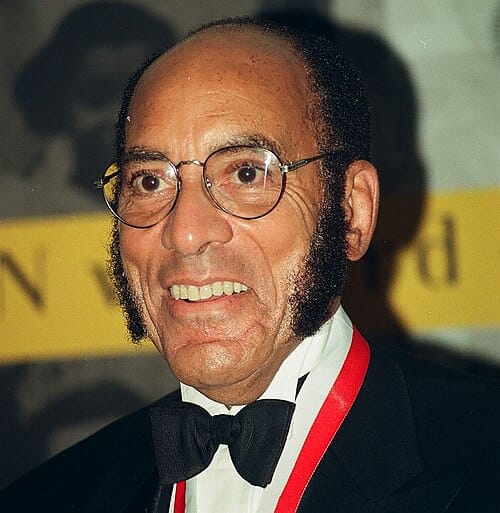
Mont Howell: The Shoemaker Who Stood His Ground in Atlanta
While white mobs torched Black Atlanta in 1906, Mont Howell watched — then spent the next four decades proving they couldn't destroy what he had built.

– 11 min read


While white mobs torched Black Atlanta in 1906, Mont Howell watched — then spent the next four decades proving they couldn't destroy what he had built.
Yesterday's Architects · The Black Executive Journal™ Atlanta, Georgia · 1866–1944 · Retail, Manufacturing & Black Business Advocacy
It began on a Saturday evening, September 22, with newspaper extras hitting the streets reporting alleged assaults by Black men on white women. Most of the reports were false.
It did not matter.
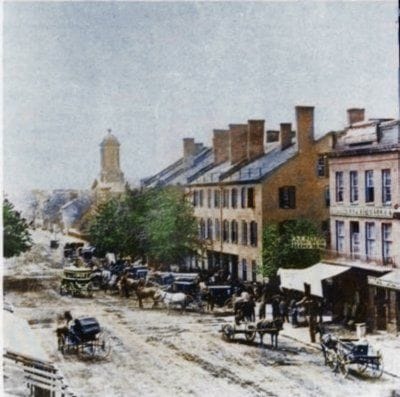
By nightfall, thousands of white men had formed into mobs and were surging down Decatur Street, Pryor Street, and through the central business district, attacking any Black person they encountered on the street, on streetcars, or inside their own establishments.
They smashed windows, looted stores, dragged men from trolleys, and killed. At least 25 Black Atlantans died over four days of violence.
The real number was almost certainly higher.
Among the first targets was Alonzo Herndon's barbershop on Peachtree Street — one of the most celebrated Black-owned businesses in the South — where the fittings were destroyed and an employee at a shop across the street was beaten to death.
Mont Howell was there.
He witnessed it.
And when it was over, he was still there — still operating the People's Shoe Store, still sitting on the Executive Committee of the National Negro Business League, still building the kind of enterprise that the mobs had set out to destroy.
That is the core of what Mont Howell's life means to the history of Black business in America. Not a single dramatic breakthrough, but something harder and rarer: persistence across the full span of one of the most brutal eras in American commercial history.
He was born one year after emancipation.
He died in 1944, a year before the end of World War II.
In between, he built a business that survived everything the post-Reconstruction South could throw at it.
Mont Howell attended Atlanta University — an institution that, in the late 19th century, was among the few places in the South where Black men and women could receive a rigorous college education.
Founded in 1865 by the American Missionary Association in the immediate aftermath of the Civil War, Atlanta University sat on the Westside of Atlanta and represented a specific and contested vision: that Black intellectual and professional development was not only possible but necessary for the advancement of the race.
By the late 1880s and 1890s, when Howell was among its students, Atlanta University was operating at the center of a profound tension.
The emergence of a Black elite in Atlanta contributed to racial tensions in the city. During Reconstruction, Black men gained the right to vote, and as Blacks became more involved in the political realm, they began to establish businesses, create social networks, and build communities.
As this Black elite acquired wealth, education, and prestige, its members attempted to distance themselves from the Black working class.
Howell was educated into that elite at precisely the moment it was becoming visible enough to provoke violent backlash.
Washington argued that Southern white businesspersons failed to satisfy their black customers by either neglecting them or misunderstanding their needs and desires.
Since black businesspersons knew their own race, they possessed a competitive market edge in serving the African American community.
Howell absorbed this argument — and then went out and built a business that embodied it.
Mont Howell and his brother Edward opened the People's Shoe Store in Atlanta's Black commercial district — a retail and manufacturing operation that served the city's Black population at a moment when that population was being systematically excluded from every other avenue of civic and commercial life.
The name was not incidental. "People's" positioned the enterprise explicitly as a community institution rather than a personal venture — a business whose success was tied to the advancement of the people it served.
In the context of late 19th and early 20th century Atlanta, this framing carried specific weight. Approximately 60 percent of all Black businesses in Atlanta were of five different types: lunch rooms, barbers, shoemakers, grocers, and clothing renovators.
Du Bois noted that Black businesses developed along the lines of skills learned on the plantations.
Plantation mechanics became shoemakers.
Howell understood this lineage.
He also understood that the shoe trade was one of the few industries where a Black entrepreneur in Atlanta could build a manufacturing operation as well as a retail one — creating value at both ends of the chain.
Atlanta was a lucrative market for Blacks in the building trades and personal services: barbering, tailoring, dressmaking, blacksmithing, masonry, carpentry, plastering, and painting.
These were the traditional services that an elite corps of slaves had generally performed. After emancipation, they were the occupations that made for Black entrepreneurial success, but that were considered at the time too menial for whites in the South.
While such opportunities could not be considered areas of autonomy, they were, nevertheless, windows of business opportunity.
Mont Howell climbed through one of those windows and built a permanent structure behind it.
By 1905, Mont Howell's standing in Atlanta's Black business community had earned him a seat at the most consequential Black commercial organization in the country.
The National Negro Business League was founded by Booker T. Washington in Boston in 1900.
The league, which predated the United States Chamber of Commerce by 12 years, strives to enhance the commercial and economic prosperity of the African American community.
Washington's theory was clear and pointed: economic power would precede political equality.
Build the businesses first.
Build the institutions.
Force white America to reckon with Black prosperity as a fact on the ground rather than an aspiration to be suppressed.
The NNBL grew rapidly with 320 chapters in 1905 and more than 600 chapters in 34 states in 1915. Mont Howell was elected to its Executive Committee — not a chapter membership, but national leadership.
His name appeared in the New York Age on September 14, 1905, in the published list of Officers and Members of the Executive Committee, documented in the Schomburg Center for Research in Black Culture at the New York Public Library.
He was photographed alongside Washington and the League's other national officers.
This placed Howell inside the most important strategic debate in Black America at the turn of the 20th century: Washington's philosophy of economic self-development versus W.E.B. Du Bois's insistence on political rights and social equality.
Howell had chosen his ground.
He was a Washington man — committed to the proposition that a Black-owned shoe store, replicated a thousand times across the South, was the foundation on which everything else had to be built.
A year later, the streets of his city would put that proposition to its most brutal test.
The 1906 Atlanta Race Massacre did not emerge from nowhere.
It was manufactured.
Both Hoke Smith, the former publisher of the Atlanta Journal, and Clark Howell, the editor of the Atlanta Constitution, were in the position as gubernatorial candidates to influence public opinion through their newspapers.
Smith inflamed racial tensions in Atlanta by insisting that Black disenfranchisement was necessary to ensure that Blacks were kept "in their place"; that is, in a position inferior to that of whites.
The newspapers ran story after story about alleged assaults by Black men on white women, most of them fabricated or wildly exaggerated. The atmosphere they created was combustible by design.
By early evening on September 22, the crowd had become a mob; from then until after midnight, they surged down Decatur Street, Pryor Street, Central Avenue, and throughout the central business district, assaulting hundreds of Blacks.
The mob attacked Black-owned businesses, smashing the windows of Black leader Alonzo Herndon's barbershop.
The crowd also attacked streetcars, entering trolley cars and assaulting Black men and women.
Mont Howell witnessed this. Rebecca Burns, in Rage in the Gate City: The Story of the 1906 Atlanta Race Riot (University of Georgia Press, 2011), documents Howell's firsthand account of the massacre — placing him at the scene as the violence unfolded around him.
He watched what white rage, political manipulation, and journalistic incitement could do to a Black commercial district that had taken decades to build.
A central piece of the legacy of the 1906 massacre was the creation of Atlanta's Black business neighborhoods, such as Sweet Auburn Avenue and West Hunter Street.
More than one writer has suggested that the massacre led to increased segregation not purely because of zoning laws, but as a means of self-protection. Black businesses moved toward Black-dominated neighborhoods voluntarily to better defend themselves.
This was the world Howell navigated after the smoke cleared — a city whose commercial geography had been violently redrawn, where the relative safety of a Black business district on Auburn Avenue came at the cost of the integrated commercial presence that had existed before September 22, 1906.
He stayed. He rebuilt. He kept operating.
What distinguishes Mont Howell in the record of Black Atlanta business history is not a single transaction or a landmark legal case.
It is the span.
He was born into the first generation of free Black Americans.
He built his business during the nadir — the period between roughly 1890 and 1920 that scholars identify as the lowest point in American race relations since slavery, characterized by mass disenfranchisement, systematic economic exclusion, and epidemic racial violence.
He survived the 1906 massacre.
He operated through the imposition of ever-tightening Jim Crow legislation.
He navigated the Great Depression. And he testified in a Georgia courtroom in 1928 as a witness in a murder trial in Chatsworth — an act requiring a quality of personal courage that is difficult to fully convey to anyone who has not studied what it meant for a Black man to appear as a witness in a Southern criminal proceeding in the 1920s.
"Atlanta became this incubator, more broadly, for national leadership, for the establishment of national organizations and institutions that would have a national impact in the wake of that 1906 Atlanta Race Riot," historian Clarissa Myrick-Harris noted.
Despite this horrific episode of violence, Black Atlantans regrouped and rebounded as best they could. "They rebuilt their businesses. They rebuilt their homes."
Mont Howell was among those who rebuilt.
His name does not appear in the standard histories of Atlanta business. Alonzo Herndon — whose barbershop was among the massacre's first targets and who founded the Atlanta Life Insurance Company — is the figure history preserved.
Howell, who attended Atlanta University alongside the same generation, sat on Booker T. Washington's national executive committee, and kept the People's Shoe Store operating for nearly half a century, did not make the same cut.
He was the kind of builder whose significance is legible only in the aggregate: one of dozens of Black entrepreneurs who collectively made Sweet Auburn possible, who proved by sheer endurance that the massacre had not accomplished its economic objective.
Sweet Auburn was designated a National Historic Landmark in 1976.
It exists because men like Mont Howell refused to leave.
The single most important thing Mont Howell did for Black Atlanta was stay.
After the 1906 massacre, every Black entrepreneur who kept their doors open was making an argument with their continued operation: that racial terror was not an effective instrument of economic policy.
The accumulation of those individual decisions — to reopen, to rebuild, to refuse displacement — is what created Sweet Auburn.
Persistence at scale is infrastructure.
A shoe store on a Black commercial street in Jim Crow Atlanta had limited leverage in isolation.
A shoe store whose owner sat on the Executive Committee of the National Negro Business League — the most powerful Black commercial organization in the country — was connected to a network of 600 chapters, national advocacy, and the strategic attention of Booker T. Washington himself.
Howell understood that local enterprise and national organization were not competing priorities.
They were the same investment made at two different scales.
Atlanta University in the 1880s produced Black men who would be systematically denied the political and civic rights that their education had prepared them to exercise. The Georgia legislature had largely completed Black disenfranchisement by the turn of the century.
Howell's Atlanta University degree did not buy him the vote or protection from a white mob.
What it bought him was the analytical and organizational capacity to build an enterprise, gain national recognition, and navigate the most dangerous commercial environment in America for nearly five decades.
The credential was constrained by the system.
The knowledge was not.
Mont Howell's documented presence at the 1906 massacre — recorded in Rebecca Burns' scholarly account and traceable to primary sources — means that his testimony is part of the historical record of what happened in Atlanta that September.
Black entrepreneurs who were present at the defining violent events of their era, and who survived to give account of them, performed a service that went beyond commerce.
They made erasure harder.
Howell was a witness in the legal sense in 1928.
He was a witness in the historical sense in 1906. Both forms of testimony required the same thing: the willingness to be present and identified when the system preferred Black invisibility.
Many Black business owners relocated from the downtown business district to Auburn Avenue, which formed the foundation of what Fortune magazine would later call "the richest Negro street in the world."
The Auburn Avenue that became a national landmark was built on the decisions made by individual Black entrepreneurs in the months and years after September 1906. Howell was one of them.
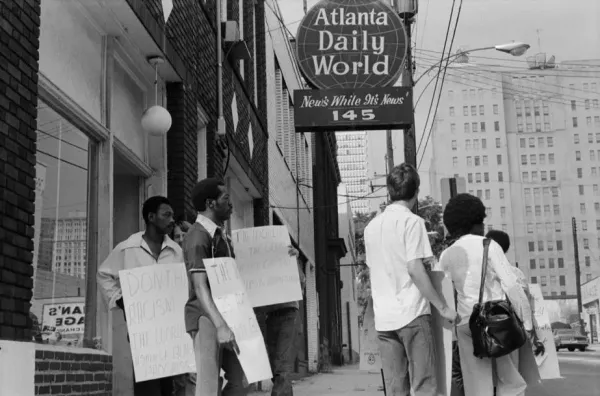
The street's later glory — the insurance companies, the banks, the Atlanta Daily World, the birthplace of Martin Luther King Jr. — was built on the foundation laid by men who refused to be moved.
Yesterday's Architects is a biographical series by The Black Executive Journal honoring the Black and African entrepreneurs, executives, and innovators who laid the foundation before us — the dealmakers, the institution founders, the strategists who created industries and wealth across the diaspora when the odds were designed against them.
The essential starting point for understanding Howell's world is Rebecca Burns' Rage in the Gate City: The Story of the 1906 Atlanta Race Riot (University of Georgia Press, 2011), which documents Howell's firsthand witness account of the massacre on pages 34–35 and situates him within the broader story of Black Atlanta's commercial life.
David F. Godshalk's Veiled Visions: The 1906 Atlanta Race Riot and the Reshaping of American Race Relations (University of North Carolina Press, 2005) provides the deepest scholarly treatment of the massacre and its long-term consequences for Black business geography.
For the National Negro Business League context, the microfilm edition of the NNBL's records — held at the Library of Congress and indexed through University Publications of America — is the primary archival source; Howell's Executive Committee membership is documented in the New York Age (September 14, 1905), available via Newspapers.com and held at the Schomburg Center for Research in Black Culture at the New York Public Library.
Keith Hollingsworth's essay "Perseverance: Black Business Response to the Atlanta Race Massacre," published in Atlanta Studies (2025), provides the most current quantitative analysis of Black business survival rates after 1906 and is available in full online.
Gary M. Pomerantz's Where Peachtree Meets Sweet Auburn: The Saga of Two Families and the Making of Atlanta (Penguin Books, 1997) tells the parallel story of Atlanta's white and Black commercial elites with a novelistic depth that no strictly academic account matches.