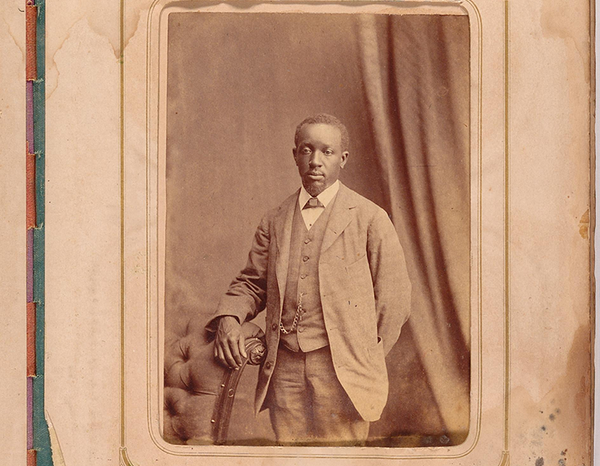
Yesterday's Architects · The Black Executive Journal™ Davis Bend / Mound Bayou, Mississippi · 1847–1924 · Town Building, Agriculture, Commercial Enterprise & Political Strategy
At a Glance
- Born enslaved on May 21, 1847, at Hurricane Plantation, Davis Bend, Mississippi — the property of Joseph Davis, older brother of Jefferson Davis, president of the Confederacy
- His father Ben Montgomery, while still enslaved, ran the plantation store, invented a boat propeller, accumulated personal wealth, and was assessed a net worth of $230,000 by the R.G. Dun Mercantile Agency in 1873 — placing him among the top 7 percent of all Southern merchants and planters
- After the Civil War, Ben Montgomery purchased Jefferson Davis's plantation for $300,000 — Isaiah grew up in the house Jefferson Davis had built; the Montgomerys ran the third-largest cotton operation in Mississippi
- After floods, falling cotton prices, and his father's death destroyed the Davis Bend enterprise, Isaiah founded Mound Bayou in 1887 — purchasing 840 acres of Mississippi Delta wilderness for $7 an acre alongside his cousin Benjamin T. Green
- Built Mound Bayou from raw swampland into a self-governing Black town of 8,000 people with 13 stores, a sawmill, three cotton mills, the leading Black-owned bank in Mississippi, ten churches, and a privately maintained high school — Booker T. Washington called it "the jewel of the Delta"
- As the only Black delegate at the 1890 Mississippi Constitutional Convention, voted to ratify a constitution that effectively disenfranchised nearly every Black voter in Mississippi — drawing Frederick Douglass's condemnation and the lasting controversy that shadows his legacy
- Personally recruited Julius Rosenwald of Sears-Roebuck to invest $25,000 in Mound Bayou's Cotton Oil Mill — the Black press called it "the largest thing of the kind ever undertaken by Negro people"
- His town became a safe haven for civil rights activists across the 20th century; scholars argue that without Mound Bayou, figures like Medgar Evers, Fannie Lou Hamer, and Rosa Parks might never have found the organizational footing that made them visible to history
- His I.T. Montgomery House in Mound Bayou is a National Historic Landmark
The house Isaiah Montgomery grew up in had been built by Jefferson Davis
Not metaphorically.
Literally.
After the Civil War, Davis' older brother Joseph — who had owned the Montgomery family as property — sold the family's Hurricane and Brierfield plantations to Isaiah's father Ben Montgomery for $300,000.
The terms were a nine-year mortgage at annual interest payments of $18,000.
Ben and Isaiah moved into the mansion on the property.
They planted cotton.
They ran the general store.
They built what became the third-largest cotton operation in Mississippi.
A formerly enslaved man lived in the house of the man who had enslaved him, on land purchased with the proceeds of labor that enslavement had extracted — and he was running one of the most successful agricultural enterprises in the state.
This is the family Isaiah Montgomery came from. And it explains almost everything about what he built next.
When floods and falling cotton prices finally destroyed the Davis Bend enterprise and his father died in 1877, Isaiah Montgomery did not simply accept the loss.
He spent the next decade looking for land on which to build what his father had always wanted: a self-governing community for freed people, beholden to no one. In 1887, he found it. He bought 840 acres of raw Mississippi Delta wilderness — swamp, timber, dense undergrowth, wild animals — for $7 an acre.
He named it Mound Bayou. And over the next three decades, he turned it into the most ambitious experiment in Black self-determination in American history.
Then, in 1890, he cast the vote that haunts everything he built.
What His Father Built First
To understand Isaiah Montgomery, you have to understand Ben Montgomery — because Isaiah was not starting from zero. He was the inheritor and executor of a vision that had already traveled further than almost any other Black family in 19th-century America.
Ben Montgomery was born into slavery in 1819 in Loudoun County, Virginia.
In 1836 he was sold south and purchased by Joseph Emory Davis, who took him to Hurricane Plantation. What happened next defies almost every assumption about what slavery permitted.
Joseph Davis, influenced by the utopian theories of British reformer Robert Owen, ran Hurricane Plantation as something he called a "community of cooperation" — his enslaved workers operated a court system, managed their own discipline, and were permitted to accumulate personal wealth.
Davis allowed the young man free access to the Hurricane Plantation library.
Montgomery improved his literacy and developed skills as both a mechanic and a surveyor.
In 1842 Benjamin Montgomery opened a retail store on Hurricane Plantation, selling general merchandise to both slaves and their owners. Montgomery developed a personal line of credit with wholesalers in both Natchez and New Orleans and bought and sold goods in his own name.
He also invented a boat propeller suited to shallow Southern waterways — but the patent office rejected his application because slaves were not considered citizens and therefore could not hold patents.
The invention went unrecognized.
The knowledge stayed with him.
When the Civil War ended and the Montgomerys returned to Davis Bend, Ben moved quickly. In October 1866 Montgomery asked Davis to lease the Hurricane and Brierfield Plantations to him.
Davis countered with an offer to sell his plantation holdings to his former slave. They agreed on a price of three hundred thousand dollars, with yearly interest-only payments of eighteen thousand dollars and the principal due in nine years.
The Montgomerys planted cotton.
They won first place at the St. Louis Fair in 1870 for the best long-staple cotton in the country.
The R.G. Dun Mercantile Agency assessed Benjamin Montgomery's net worth in 1873 as $230,000, placing him among the top 7 percent of all southern merchants and planters.
Isaiah grew up watching this — his father running what had been the Confederate president's plantation from inside Jefferson Davis's house, competing at international expositions, building a self-governing Black community on land extracted from the people who had extracted everything from them.
When floods, crop failures, and the end of Reconstruction finally destroyed Davis Bend and his father died in 1877, Isaiah understood precisely what had been lost.
He spent the next decade trying to rebuild it somewhere the Mississippi River couldn't reach.
Building Mound Bayou: The Jewel of the Delta
Mound Bayou was established in 1887 by Isaiah T. Montgomery and Benjamin T. Green, both formerly enslaved on the Davis Bend plantation.
The town's founding was no accident but rather the culmination of a carefully crafted vision for Black independence. Montgomery and Green negotiated with the Louisville, New Orleans, and Texas Railway Company to purchase land for their settlement.
They chose an area with fertile soil but dense wilderness, requiring immense labor to clear.
The founding transaction was itself a piece of business strategy.
Isaiah had secured a position as a land agent for the Louisville, New Orleans, and Texas Railroad — whose owners needed towns established along their new Memphis-to-Vicksburg rail line, and who believed, with a racist logic that Montgomery nonetheless turned to his advantage, that Black settlers were better suited to the swampy Delta climate.
He used the railroad's need to acquire the Montgomerys' land at favorable terms. Montgomery and Green bought the 840-acre property for $7 an acre.
What followed was a decade of extraordinary collective labor.
The land was dense wilderness — timber, undergrowth, swamp fever, wild animals. The original twelve settlers from Davis Bend cleared it by hand. They recruited more freedmen from across the South, drawing on Montgomery's reputation and the memory of what Davis Bend had been.
By 1888, the town had 40 residents and 1,500 African Americans in the area.
By the turn of the century, Mound Bayou had more millionaires in the population than any Delta town, based on the cotton.
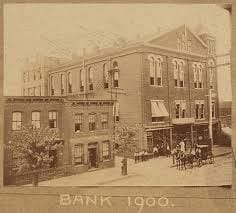
By the second decade of the twentieth century, Mound Bayou's population had mushroomed to two thousand and it had thirteen stores, several small shops, a sawmill, three cotton mills, the leading Black-owned bank in Mississippi, and ten churches.
There was also a privately maintained high school of two hundred pupils, a rarity for African Americans anywhere in the country.
Mound Bayou had a U.S. Post Office, six churches, banks, stores, and several public and private schools. Socially, Mound Bayou had an exceptionally low crime rate, high morals — no gambling, no sale of alcohol — and everyone had to be a useful member of the community. Montgomery wrote the town's laws and governed their application.
He understood that Mound Bayou's survival depended not just on economic productivity but on an internal discipline that would give hostile whites no pretext for intervention.
Booker T. Washington visited repeatedly and called Mound Bayou "an example of thrift and self-government." Theodore Roosevelt, during a 1907 visit, praised the community.
The Black press covered it as the proof of concept for Washington's entire philosophy: that economic self-determination, built carefully and defended politically, was the foundation on which everything else had to rest.
The Capital Campaign: Rosenwald, the Oil Mill, and the Limits of Black Finance
Montgomery's ambitions for Mound Bayou did not stop at cotton farming and dry goods stores.
He wanted industrial infrastructure — a cotton oil mill that would allow Mound Bayou to process its own crop rather than sell raw cotton to white-owned mills at exploited prices.
He went to New York and Washington, D.C. to recruit wealthy white investors for the Mound Bayou Cotton Oil Mill. He worked closely with Booker T. Washington in this effort to persuade Julius Rosenwald, the president and chair of the board of Sears-Roebuck, to subscribe to $25,000 in bonds.
The Black press described the Mill as "the largest thing of the kind ever undertaken by Negro people."
The oil mill's opening in November 1912 was attended by an estimated 16,000 people. Washington spoke from an outdoor platform.
It was the largest gathering in Mound Bayou's history and a moment of genuine triumph — a Black-owned industrial facility in the Mississippi Delta, capitalized at $100,000, producing cotton oil and generating revenue that would circulate within the community rather than flowing out to white processors.
The oil mill, whose stock was bolstered by contributions from such outside investors as white philanthropist Julius Rosenwald, was initially capitalized at $100,000; it promised to be the industrial centerpiece of the small town. By 1914, however, economic problems plagued Mound Bayou.
The falling price of cotton and a lack of capital forced many residents to depend upon credit extended by white merchants from other communities.
The Bank of Mound Bayou failed in the fall of 1914.
The oil mill never achieved sustained production under Black supervision — its owners and shareholders were forced to cede control of the mill to B. B. Harvey of Memphis, an unscrupulous white businessman.
This is the economic reality that Montgomery's accommodationist strategy could not ultimately escape. Mound Bayou's survival depended on cotton prices set by national markets, capital flows controlled by white investors, and credit extended by institutions that could withdraw it at will.
The town was a sovereign community inside an economy that was not.
When the macroeconomic environment turned hostile — cotton prices falling, Reconstruction's financial architecture dismantled, the Great Migration drawing away labor — the structural vulnerabilities Montgomery had navigated around for three decades could no longer be managed.
The Vote That Defined — and Divided — His Legacy
In August 1890, Isaiah Montgomery walked into the Mississippi Constitutional Convention in Jackson as its only Black delegate — the only Republican in a room full of white Democrats whose explicit purpose was to end Black political participation in Mississippi permanently.
The convention drafted a new constitution deploying poll taxes, literacy tests, and an "understanding clause" — requiring prospective voters to read and interpret any section of the state constitution to the satisfaction of a white registrar.
With little ability to challenge it, Montgomery accepted the clause, arguing that while it was "apparently one of unfriendliness" to Blacks it was in the public interest to prevent illiterates from voting.
The response from Black America was swift and devastating.
Frederick Douglass delivered a speech before the Bethel Literary and Historical Society in Washington, D.C., that the Washington Post called "A Notable Address Delivered by the Colored Statesman."
Douglass cited Montgomery's position as an act of "treason, to the cause of the colored people, not only of his own state, but of the United States," and lamented having heard in Montgomery "a groan of bitter anguish born of oppression and despair" and a voice of a "soul from which all hope had vanished."
Douglass would not leave it there.
"Such a man," he declared, "is not to be dismissed by calling him a traitor, nor a self-seeking hypocrite, for he is neither the one nor the other... Like a general on the field of battle, he has retreated when he could no longer fight and has surrendered a post which he thought he could no longer successfully defend."
This is the most honest accounting of what Montgomery did and why.
He was the sole Black man in a room where the outcome was predetermined. Mississippi's Black voters were going to be disenfranchised whether Montgomery voted yes or no.
He understood this.
His calculation — contested then, contested now — was that accommodation preserved Mound Bayou and the model of Black self-governance he had spent his life building, while open opposition would have achieved nothing except his own destruction and the likely destruction of the town.
Montgomery promoted an accommodationist position for African Americans — a strategy of protecting what existed rather than contesting for what could not yet be obtained.
Politically, Mound Bayou's mayor protected it from white violence through political accommodation.
The cost of that strategy was the disenfranchisement of Black Mississippi. The cost of the alternative — in the Mississippi of 1890, with Reconstruction over and white supremacy fully restored — was incalculable and possibly unsurvivable.
History does not resolve this.
It should not.
Both Douglass's condemnation and his grudging respect were correct.
What Mound Bayou Made Possible
It is fair to say that no other small town has contributed so much to advancing human freedom in the United States during the twentieth century than Mound Bayou, Mississippi.
Had that little community not existed, such civil rights icons as Medgar Evers, Fannie Lou Hamer, and Rosa Parks might have remained invisible to history.
This is not hyperbole.
Mound Bayou was, for decades, the only place in Mississippi where Black Americans exercised genuine free speech and assembly rights, voted, and held office.
It was a base of operations, a place where movement organizers could meet without the constant threat of violence that made organizing impossible in white-controlled towns across the Delta.
During the Civil Rights Movement, Mound Bayou served as a relatively safe haven for activists. Its all-Black governance provided some protection from the white supremacist violence that plagued other parts of Mississippi.
Dr. T.R.M. Howard arrived in Mound Bayou in the 1940s and used it as a springboard to build a hospital, a thousand-acre farm, the first swimming pool for Black Mississippians in the state, and a community entertainment center that drew visitors from across the South.
He then turned Mound Bayou into a base for civil rights organizing that directly enabled the movement that followed.
The infrastructure was Montgomery's.
Howard built on top of it.
Despite its sharp population decline throughout the century, Mound Bayou still exists today as a predominantly Black town in Mississippi with a 98.6 percent Black population.
It is still governed by Black officials.
It still bears the name Isaiah Montgomery chose for it in 1887.
That, in a state that spent a century trying to erase Black political and economic power, is itself a form of victory.
What His Life Teaches
The most consequential act of entrepreneurship is sometimes building a place, not a product
Montgomery did not build a business.
He built a jurisdiction — a physical location with its own laws, its own governance, its own economy. This is the rarest and most durable form of Black business enterprise: the creation of a geography where the rules are different.
Every institution Mound Bayou housed existed because the town existed first.
The town existed because Montgomery understood that without a protected physical space, every other enterprise was permanently vulnerable.
Generational vision compounds across time in ways that balance sheets cannot capture
Ben Montgomery's dream was Davis Bend. Isaiah converted that dream into Mound Bayou after Davis Bend failed. T.R.M. Howard converted Mound Bayou into a civil rights base after the oil mill and bank failed.
Medgar Evers organized from the infrastructure Howard built.
The compound return on Ben Montgomery's original investment — in literacy, in business, in the vision of Black self-governance — produced the Civil Rights Movement's Mississippi chapter four generations later.
No ledger captures that.
Capitalization is the constraint that kills every other ambition.
The Mound Bayou Cotton Oil Mill was a genuine industrial achievement — Black-owned, Black-operated, capitalized at $100,000, opened by Booker T. Washington before 16,000 people.
It failed because the town could not sustain it against falling cotton prices without external capital, and external capital came with external control. Montgomery understood this problem.
He never solved it.
Neither has any subsequent generation of Black entrepreneurs operating in a capital market structured against them.
The problem is structural, not personal — but understanding its structure is the beginning of addressing it.
Accommodation and resistance are not opposites — they are instruments, and the choice between them is strategic, not moral
Montgomery's 1890 vote has been condemned as treason and defended as tactical retreat. Douglass held both positions simultaneously and was right to do so. The lesson is not that accommodation is acceptable or unacceptable.
The lesson is that the choice between accommodation and resistance must be made with a clear accounting of what each option actually costs and what it actually preserves — not what it costs in principle, but what it costs in practice, in your specific situation, against a specific adversary.
Montgomery made that calculation in 1890 Mississippi and committed to it fully.
Reasonable people disagreed then and disagree now.
That is the point.
Sovereignty is the ultimate business asset
Mound Bayou had its own post office, its own bank, its own courts, its own schools, its own newspaper.
Within those structures, Black residents could vote, accumulate property, educate their children, and organize without white permission. Every other Black entrepreneurial enterprise of the era operated at the sufferance of white political and legal systems.
Mound Bayou, for a few extraordinary decades, did not.
Montgomery understood that self-governance was not a political luxury.
It was the prerequisite for every other form of freedom.
Yesterday's Architects is a biographical series by The Black Executive Journal honoring the Black and African entrepreneurs, executives, and innovators who laid the foundation before us — the dealmakers, the institution founders, the strategists who created industries and wealth across the diaspora when the odds were designed against them.
For Further Study
The essential starting point is Janet Sharp Hermann's The Pursuit of a Dream (Oxford University Press, 1981) — the definitive scholarly account of the Montgomery family from Davis Bend through Mound Bayou, rigorously researched and still unsurpassed.
Neil R. McMillen's two-part biographical essay on Isaiah T. Montgomery, published in Mississippi History Now by the Mississippi Historical Society (February 2007), is the most thorough and accessible scholarly biography available online.
The Mississippi Encyclopedia's entries on both Isaiah T. Montgomery and Benjamin T. Montgomery, written by James Tyson Currie, provide precise archival detail on the Davis Bend enterprise. David Beito's essay "Freedom's Outpost: Mound Bayou and the Fight for Free Expression in Jim Crow Mississippi, 1887–1941," published in The Independent Review (Fall 2025), offers the most current analysis of Mound Bayou's long-term significance to civil rights organizing.
Booker T. Washington's own chapter on Montgomery in The Negro in Business (Hertel, Jenkins & Co., 1907) — available in full via HathiTrust — captures the relationship between the two men at its most productive and reflects Washington's philosophy of Black economic self-determination in its fullest expression.
The Schomburg Center for Research in Black Culture at the New York Public Library holds the primary photographic archive of Montgomery and Mound Bayou. The I.T. Montgomery House in Mound Bayou, a National Historic Landmark, is currently undergoing renovation and remains publicly accessible.