Inside the Bank Built to Replace Bretton Woods: What Every African Business Leader Needs to Know About the NDB
Black Executive Journal | Global Markets & Capital | Week 2 of 6 — "Building the 21st Century" Series

– 6 min read


Black Executive Journal | Global Markets & Capital | Week 2 of 6 — "Building the 21st Century" Series
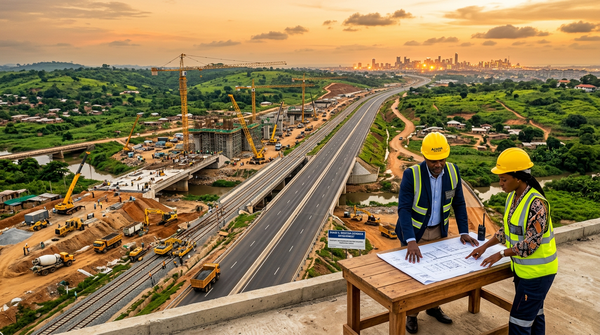
In July 2014, the leaders of Brazil, Russia, India, China, and South Africa gathered in Fortaleza, Brazil, and signed a founding agreement that had not been attempted since 1944: a multilateral development bank built by and for the Global South.
Paulo Nogueira Batista Jr., who was in the room as one of the bank's founding architects, explained the logic plainly at the time:
"If the existing institutions were doing their jobs perfectly, there would be no need to go to the trouble of creating a new bank."
They went to the trouble.
The New Development Bank is now operational, fully capitalized, and as of early 2026, has approved $42.9 billion across 139 projects. For Black and African business leaders, this institution is not a geopolitical talking point.
It is an operating capital source — one that works by fundamentally different rules than the World Bank or the IMF, and those differences matter enormously.
Every executive who has watched an African government navigate IMF or World Bank financing knows the drill.