Today's Builders · The Black Executive Journal™ Brooklyn, NY · Publishing, Media & Black Economic Development · Black Enterprise 1970–2020
He Built the Bible of Black Business From a $250,000 Bank Loan and a Blank Page
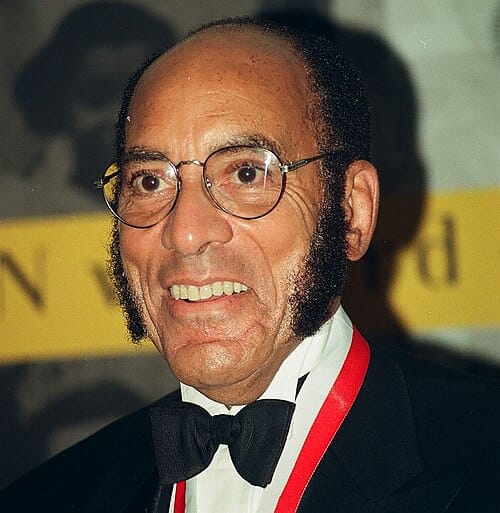
Earl G. Graves Sr. did not inherit a media company. He created the category. In August 1970, with a loan from Chase Manhattan Bank, a small staff, and a mission that had no commercial precedent, he put the first issue of Black Enterprise on newsstands. Fifty years later, the magazine he built had reached more than 6 million African Americans and changed the terms on which Black business was conducted in America.
At a Glance
— Born January 9, 1935 in Brooklyn, New York, to Earl Godwin Graves — an immigrant from Barbados — and Winifred Sealy Graves, from Trinidad; raised in the Bedford-Stuyvesant section of Brooklyn; died April 6, 2020 in White Plains, New York, from complications of Alzheimer's disease, at age 85
— Graduated from Morgan State University in 1958 with a BA in economics; member of Omega Psi Phi fraternity; completed ROTC and attended both Airborne and Ranger Schools; served two years as an officer in the U.S. Army before careers in law enforcement and real estate
— Began his professional life selling Christmas cards for his uncle at age seven; put himself through Morgan State University partly by cornering the flower market during Homecoming Week — cutting deals with two competing florists and selling on commission across campus
— Joined the staff of U.S. Senator Robert F. Kennedy in 1965 as his administrative assistant; following Kennedy's assassination in 1968, was appointed to the advisory board of the Small Business Administration, where his direct work with the agency convinced him of the need for a publication dedicated to Black business and economic development
— Secured a $250,000 loan from Chase Manhattan Bank and launched the first issue of Black Enterprise in August 1970; the magazine became profitable in 10 months, enabling Graves to repay the loan in full
— Built Earl G. Graves, Ltd. into a diversified multimedia company spanning publishing, marketing, radio, television, and event coordination; Black Enterprise appeared on its own BE 100s list — the annual ranking of the nation's largest Black-owned businesses — for 47 consecutive years
— In 1990, partnered with Magic Johnson to purchase Pepsi-Cola of Washington, D.C. in a $60 million transaction — creating the nation's largest minority-controlled Pepsi bottling franchise; Graves held more than 65% ownership and served as CEO; key accounts included the White House, the U.S. Capitol, and Air Force One; sold his majority stake in 1999
— Co-owner of the Black Enterprise Greenwich Street Corporate Growth Fund, a private equity partnership formed with Travelers Group, Inc., aimed at investing in and promoting minority-operated businesses
— Served on the boards of American Airlines (AMR Corporation), Daimler AG, Federated Department Stores, and Rohm and Haas; board member of the American Museum of Natural History and the Hayden Planetarium; trustee of Howard University
— Received the NAACP's Spingarn Medal — the organization's highest honor — in 1999; named one of Fortune magazine's 50 Most Powerful and Influential African Americans in Corporate America in 2002; inducted into the Junior Achievement U.S. Business Hall of Fame in 2007; appointed by President George W. Bush to the Presidential Commission for the National Museum of African American History and Culture
— Morgan State University's business school was named the Earl G. Graves School of Business and Management in his honor, opening in 2015; survived by three sons — Earl Jr., Johnny, and Michael — and eight grandchildren
Bedford-Stuyvesant, 1935: The Lessons That Preceded Everything
Earl Graves learned the fundamentals of commerce before he had a name for them. At age seven, his uncle put him to work selling boxed Christmas cards.
His father imposed a rule: he could only sell to people living on their side of the block.
The lesson embedded in that constraint — work the territory you have, work it completely, then expand — became the operating logic of everything Graves built.
His parents, both educators, raised him in Bedford-Stuyvesant with structure and expectation. His father had come from Barbados. His mother from Trinidad.
They were part of a generation of Caribbean immigrants who arrived in Brooklyn with almost nothing and built households held together by discipline, education, and a clear understanding that the mainstream was not designed to accommodate them — and that this fact was a problem to be solved, not accepted.
Graves took that framework to Morgan State University, where he graduated in 1958 with a BA in economics.
He was a member of Omega Psi Phi, completed ROTC, attended both Airborne and Ranger Schools, and served two years as an Army officer. He came home to careers in law enforcement and real estate — neither of which would hold him.
What would hold him was a senator from New York and a question that senator's death left unanswered.
Robert Kennedy, 1965–1968: The Education That Made the Magazine Possible
In 1965, Graves joined the staff of U.S. Senator Robert F. Kennedy as his administrative assistant.
The role placed him inside the operational machinery of one of the most consequential political careers in mid-century America — at a moment when the intersection of civil rights, poverty, and political power was being negotiated in real time.
He learned how power actually operated. He watched how money moved through political and institutional systems.
He watched who was at the table and who was not, and he developed a precise understanding of the relationship between economic participation and political standing: communities without capital had no leverage, and communities without leverage remained outside the decisions that shaped their lives.
When Kennedy was assassinated in Los Angeles on June 5, 1968, Graves was left with a question and a resolve.
He was appointed to the advisory board of the Small Business Administration the same year. His direct work with the SBA — advising on business development and urban affairs — confirmed what he had been forming into a conviction: there was no publication dedicated to the economic development of Black America.
There was no platform for Black entrepreneurs and executives to find each other, compare notes, and understand the full scope of what Black business was and could become.
That absence was the market.
Graves decided to fill it.
The $250,000 Loan and the Magazine Nobody Had Built Before
Graves approached Chase Manhattan Bank.
He secured a loan of $250,000. He assembled a small staff. He founded Earl G. Graves, Ltd. as the holding company. In August 1970, the first issue of Black Enterprise hit newsstands.
The magazine had no direct precedent.
There was no established model for a publication dedicated exclusively to Black entrepreneurship, corporate advancement, and wealth-building. Graves was not adapting an existing format.
He was creating a category — and he was doing it with a bank loan, a small team, and the conviction that the market existed even though no one had yet built for it.
The magazine became profitable in 10 months. Graves repaid the Chase Manhattan loan in full.
What he had proven was not just that the magazine could work commercially — it was that the audience he was writing for had purchasing power, ambition, and an appetite for information that the mainstream business press was not serving.
"The time was ripe for a magazine devoted to economic development in the African American community," Graves wrote in his book How To Succeed In Business Without Being White, which became a bestseller.
"The publication was committed to the task of educating, inspiring and uplifting its readers. My goal was to show them how to thrive professionally, economically and as proactive, empowered citizens."
He built around that mission without deviation for fifty years.
The BE 100s and the Infrastructure of Black Business Accountability
One of Graves' most consequential editorial decisions was the creation of the BE 100s — the annual ranking of the nation's largest Black-owned businesses.
The list did something no other institution was doing: it made the scale of Black business visible, comparable, and accountable. It created a standard. It gave Black entrepreneurs a leaderboard.
It gave corporate America a directory. It gave Black consumers a map of where their dollars could go.
Black Enterprise appeared on its own BE 100s list for 47 consecutive years — a fact that was not lost on Graves, who understood that the publication's credibility as a chronicler of Black business success depended in part on its own commercial performance.
He ran the company with that accountability in mind.
The world discovered Oprah Winfrey, Kenneth Chenault, Bob Johnson, and Reginald F. Lewis on the pages of Black Enterprise before those names were known to the mainstream press.
Robert F. Smith, the billionaire founder of Vista Equity Partners, has said publicly that he switched careers to high finance after reading Black Enterprise as a young man.
That kind of reach — the ability to redirect the career trajectories of people who would go on to reshape American finance — was not accidental.
It was the product of a publication that consistently treated Black economic ambition as serious subject matter when almost no other major media outlet did.
The Pepsi Deal: $60 Million, Magic Johnson, and a Conversation at 35,000 Feet
In January 1988, Graves was on a plane en route to a speaking engagement when he struck up a conversation with his seatmate — a senior Pepsi-Cola executive. He showed him a copy of Black Enterprise.
The executive told Graves that Pepsi had been looking to do business with a prominent Black businessman.
Two years of negotiations followed.
In July 1990, Graves and Earvin "Magic" Johnson completed a $60 million transaction to purchase Pepsi-Cola of Washington, D.C. — creating the nation's largest minority-controlled Pepsi bottling franchise. Graves held more than 65% ownership and served as CEO.
Johnson held more than 30% as executive vice president.
Key accounts included the White House, the U.S. Capitol, and Air Force One.
The franchise debuted on the BE Industrial/Service 100 in June 1992, ranked No. 19 with $44 million in revenues. For several years it led the BE 100s.
The plant sat on a 6.1-acre plot, employed approximately 160 people, operated its own sales staff and a fleet of trucks, and distributed Pepsi, Diet Pepsi, Mountain Dew, and other brands across Washington, D.C. and parts of Prince Georges County, Maryland.
The deal was not just a business transaction.
It was a proof of concept — evidence that Black entrepreneurs could acquire and operate a major franchise in a capital-intensive consumer goods industry. Graves sold his majority stake in 1999 when Pepsi began buying back its bottling operations.
He maintained his relationship with the company, which became a long-term title sponsor of the Black Enterprise/Pepsi Golf & Tennis Challenge.
Johnson has cited Graves as one of his business mentors.
Fifty Years, One Mission, One Standard
Graves ran Black Enterprise for fifty years. The company he built — Earl G. Graves, Ltd. — grew from a single magazine into a diversified multimedia operation spanning publishing, marketing, radio, television, and live events.
He sat on the boards of American Airlines, Daimler AG, Federated Department Stores, and Rohm and Haas — major corporations whose boardrooms had almost no Black representation when he joined them.
He received the NAACP's Spingarn Medal in 1999.
He was inducted into the Junior Achievement U.S. Business Hall of Fame in 2007.
He was appointed to the Presidential Commission for the National Museum of African American History and Culture. Morgan State University — the HBCU that gave him his economics degree in 1958 — named its business school after him in 2015.
He died on April 6, 2020, in White Plains, New York, from complications of Alzheimer's disease. He was 85.
His son Earl "Butch" Graves Jr. had been running Black Enterprise as CEO for years before his father's death and continues to lead the company. The magazine Graves built with a $250,000 loan and a blank page in 1970 still publishes.
The BE 100s list still runs.
The standard he set — that Black business deserves the same rigorous, data-driven, aspirational coverage as any other sector of American commerce — has never been formally retired.
Earl Graves did not document Black economic power.
He created the conditions for Black economic power to document itself — by building a platform serious enough that the people doing the work had somewhere to stand and be seen.
Every Black founder, executive, and investor who has ever seen themselves in the pages of a business publication owes something to the man who proved the market existed before the market believed in itself.
Sources
The following sources were used directly in the reporting of this profile. All factual claims are drawn from these documents.
Wikipedia — Earl G. Graves Sr. Primary biographical reference; birth, death, education, founding of Black Enterprise, RFK staff role, SBA advisory board, Pepsi franchise, board memberships, awards, Morgan State naming https://en.wikipedia.org/wiki/Earl_G._Graves_Sr.
Black Enterprise — Earl Graves Sr., Founder of Black Enterprise, Passes Away At 85 (April 7, 2020) Life summary, $250,000 Chase Manhattan loan, 10-month path to profitability, BE 100s history, Magic Johnson partnership, Oprah/Chenault/Smith discovery context, family details, Alzheimer's death confirmation; Derek T. Dingle byline https://www.blackenterprise.com/earl-graves-sr-founder-of-black-enterprise-and-ultimate-champion-of-black-business-passes-away-at-85/
Black Enterprise — A Moment in Black History: Earl Graves Sr. and Magic Johnson Close $60M Deal (February 22, 2023) Full Pepsi deal history sourced directly; $60 million transaction figure; Graves 65%+ / Johnson 30%+ ownership stakes; 160 employees; 6.1-acre plant; White House/Capitol/Air Force One accounts; BE 100s debut at No. 19 with $44 million revenue; 1988 airplane origin story; Weatherup and Graves quotes sourced directly https://www.blackenterprise.com/45-great-moments-in-black-business-no-30-earl-graves-sr-and-magic-johnson-close-60-million-deal-to-create-largest-black-pepsi-franchise/
Today's Builders is a series by The Black Executive Journal profiling the founders, operators, investors, and executives shaping Black and African business right now — the dealmakers closing rounds, the operators building institutions, the strategists entering new markets and constructing lasting economic infrastructure across the diaspora economy in real time.