Yesterday's Architects · The Black Executive Journal™ Richmond, VA / Philadelphia, PA / Brooklyn, NY · 1817–1883 · Real Estate, Hospitality & Abolitionist Finance
At a Glance
- Born free in 1817 in Richmond, Virginia, to a freedwoman mother; orphaned young and sent at age six to live with Rev. John Gloucester Sr. in Philadelphia — founder of the nation's first African American Presbyterian church
- Started her commercial life selling secondhand clothing in Philadelphia, then opened a furniture store on West Broadway in Manhattan — building capital methodically from the ground up
- Married James Gloucester in 1838 and moved with him to New York; when their Hudson Street home was bought out from under them for a profit, she converted the windfall into the foundation of a real estate empire
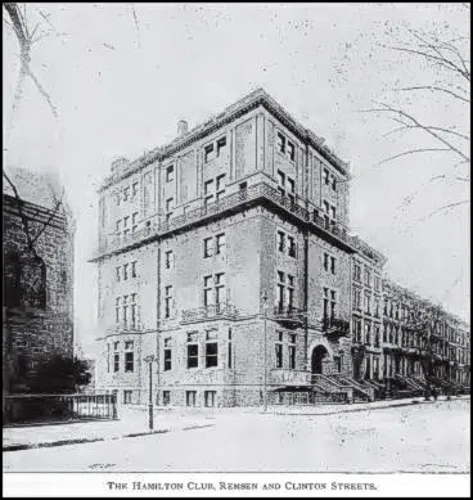
- By 1870, the Gloucester household was assessed at $50,000; they then sold all Manhattan properties and invested $150,000 in Brooklyn real estate — including the purchase of the Hamilton Club, which they converted into the Remsen House, one of Brooklyn Heights' most prestigious boarding establishments
- Ran 15 or more boarding houses across New York and Brooklyn simultaneously — the largest Black-owned hospitality portfolio in the city
- In 1857, after hearing John Brown lecture at Siloam Presbyterian Church, she invited him to stay at her home; Brown told her: "I wish you were a man, for I'd like to have you invade the South with my little band." She responded with a donation and a fundraising commitment
- The Gloucesters gave Brown $25 with a note reading: "do battle with that ugly foe, slavery" — and committed to raising money and enlisting support among New York City's 15,000 Black residents for what became the Harpers Ferry raid
- Hosted Frederick Douglass, Harriet Beecher Stowe, Henry Ward Beecher, and Henry Highland Garnett at the Remsen House; made the building a meeting place for the Freedman's Friend Society, Ladies National Union Fair, and Union Soldier Association
- Her husband co-founded Siloam Presbyterian Church — which she funded, and which served as a stop on the Underground Railroad
- At her death in 1883, her estate was valued between $300,000 and $800,000 depending on the source — making her arguably the wealthiest Black woman in America; the Brooklyn Daily Eagle called her "the remarkable colored woman" and reported that "richly dressed white ladies, fashionably attired gentlemen and a number of well-known colored people" attended her funeral
- The New York Times did not run her obituary in 1883. They corrected that omission in 2019 — 136 years later — as part of their "Overlooked No More" series
John Brown stood in her parlor in 1857 and told her he wished she were a man
He meant it as a compliment.
Elizabeth Gloucester, the wealthiest Black woman in America, who had built a real estate empire spanning Brooklyn and Manhattan from a secondhand clothing stall in Philadelphia, who ran 15 boarding houses and owned the building where the city's most powerful abolitionists met, planned, and organized — Brown looked at her and saw someone who could fight. "I wish you were a man," he told her, "for I'd like to have you invade the South with my little band."
She told him he might lose his life.
He said he was an old man; it wasn't worth much.
The Gloucesters promised to help him raise money and enlist support among New York City's 15,000 Black residents.
Two years later, Brown led 21 men to Harpers Ferry, Virginia, in the most audacious direct action the abolitionist movement had ever attempted.
Elizabeth Gloucester had helped fund it.
When she died on August 9, 1883, of pneumonia, at her home in the Remsen House on the corner of Remsen and Clinton Streets in Brooklyn Heights, the Brooklyn Daily Eagle reported that the funeral brought together "a congregation of people such as has seldom come together" — richly dressed white ladies, fashionably attired gentlemen, and a number of well-known Black people, all gathering to mourn a woman whose name they had known for decades as a byword for commercial excellence, philanthropic commitment, and social reach that crossed every line New York tried to draw.
The New York Times did not run her obituary.
They corrected that omission 136 years later.
The Education of a Merchant: From Philadelphia to Manhattan
Elizabeth Amelia Parkhill was born free in 1817 in Richmond, Virginia, to a freedwoman.
Her father is not identified in historical records, though census listings describe her as "mulatto," suggesting a white father — a detail the record preserves and her story does not require to explain.
When her mother died while she was still young, she was sent at age six to live with Rev. John Gloucester Sr. in Philadelphia — the founder of the First African Presbyterian Church, the nation's first African American Presbyterian congregation. She grew up inside one of Black Philadelphia's most significant institutional households.
At age 21, she was sent to work as a domestic with a prominent Quaker family in Philadelphia named Cook. Gloucester ran a prosperous secondhand clothing store in Philadelphia.
The clothing trade — buying, refurbishing, and reselling used garments — was one of the few commercial avenues fully accessible to Black women in antebellum America. It required capital knowledge, inventory management, customer relationships, and pricing judgment.
Gloucester ran it well enough to accumulate the foundation she needed for everything that followed.
In 1838, she married James Gloucester, the youngest son of Rev. John Gloucester Sr. — a match that united two of Philadelphia's most prominent free Black families and gave both parties institutional reach they could not have achieved separately.
When the couple moved to New York around the 1840s, they first lived in Manhattan. Gloucester opened up another clothing store, as well as a furniture store.
When her home on Hudson Street was bought for a handsome profit, Gloucester is said to have started her real estate empire.
The Hudson Street transaction is the pivot on which everything turns.
A forced sale — someone bought them out — produced a lump sum that Gloucester immediately redeployed into the asset class she would dominate for the next four decades. She did not mourn the loss of the house.
She used the proceeds to buy the next one.
The Portfolio: Fifteen Properties and a Crown Jewel
She acquired boarding homes, which often offered furnished rooms. She would eventually run 15 or more of them, including the Remsen House, an upscale boarding house in Brooklyn Heights.
The boarding house model was ideal for what Gloucester was building. Each property generated regular rental income from multiple tenants simultaneously — a diversified revenue stream within a single asset.
The cost structure was manageable: furnished rooms, staff, food service at the upscale end. The clientele, in Gloucester's case, extended from the Black community she had always served to the white professional and social class of New York and Brooklyn — a deliberately integrated customer base that maximized her revenue while building political and social connections that protected her commercial position.
By 1870, the Gloucester household was worth $50,000. They sold the entirety of their New York properties and invested in Brooklyn real estate worth approximately $150,000.
This is a textbook asset consolidation: sell a diversified Manhattan portfolio at peak value, concentrate the proceeds into a single high-value Brooklyn acquisition, and use the flagship property to anchor everything else.
Remsen House was the jewel in Elizabeth Gloucester's crown.
It was the former site of the Hamilton Club, one of Brooklyn Heights' exclusive men's clubs, founded to provide a place for well-situated gentlemen to gather, eat and drink, talk politics and finance.
The club was named for Alexander Hamilton, and stood on the corner of Remsen and Clinton Streets in the heart of Brooklyn Heights.
The Hamilton Club had expanded to a new site and sold the building. Gloucester bought it for approximately $150,000 — roughly $3 million in today's dollars — and converted it into the most prestigious boarding house in Black-owned New York.
The Gloucesters turned the building into a boarding house with the top floor of their property serving as their family home.
The couple held many meetings and dinners at the property and the other floors were rented to commercial enterprises. She lived inside her most valuable asset, managed it personally, and used it as the social and political hub of the entire operation.
The Remsen House was simultaneously her home, her business, and her platform.
Prominent white residents of New York City and Brooklyn like Henry Ward Beecher and his sister, Harriet Beecher Stowe, also frequently held or attended meetings at the property.
The author of Uncle Tom's Cabin and America's most famous preacher met at a table set by Elizabeth Gloucester.
The Abolitionist Investor: Funding Brown, Hosting Douglass
The Gloucesters' abolitionist work was not peripheral to their business — it was conducted through it. Siloam became a center of antislavery activity by the end of the 1850s.
It sponsored numerous abolitionist speakers including Frederick Douglass and Henry Highland Garnett.
Elizabeth funded the construction of the church building.
James was its pastor.
The church's Underground Railroad operations ran with the Gloucesters' active support, financial and logistical.
In February 1852, the abolitionist John Brown spoke at the church and stayed at the Gloucester family home for a week. The Gloucesters gave Brown $25 towards his cause, with a note stating "do battle with that ugly foe, slavery."
In 1857, after hearing him again, the Gloucesters marveled at Brown's spirit and "promised to help him raise money and enlist support among New York City's 15,000 Black residents."
Brown was apparently so impressed by Elizabeth Gloucester that he told her, "I wish you were a man, for I'd like to have you invade the South with my little band."
She responded with concern: "Perhaps you will lose your life." He replied that he was an old man; his life wasn't worth much.
The exchange captures something essential about Gloucester's position in the abolitionist movement. She was not a symbolic donor.
She was a strategic partner — someone whose wealth, social connections, and network access made her a genuine operational asset to the movement. Brown recognized this.
He told her so.
Two years later, when Brown's 21-man raid on the federal arsenal at Harpers Ferry triggered the chain of events that led to the Civil War, Elizabeth Gloucester's contributions were part of what had made it possible.
This was not without personal risk.
The raid's financial backers — the "Secret Six" — were investigated by a Senate committee after Harpers Ferry. The Gloucesters' known association with Brown placed them in genuine danger.
They held their position anyway.
The Estate, The Dispute, and the Record
Although she amassed the most wealth of any Black woman in the U.S. at the time of her death, just how much she had is unclear. Her obituary in the Brooklyn Daily Eagle said her net worth was thought to be between $200,000 and $500,000.
However, as her husband and children fought over her will after her passing, a lawyer for her husband told the paper that her net worth was estimated to be a little over $800,000 and that the property alone was worth $300,000.
The estate dispute is itself instructive.
The courts allowed Rev. Gloucester a large part of the estate, with the Gloucester children compromising on their inheritance to allow the case to end.
The remaining sisters ran Remsen House as their mother did, until they sold it back to the Hamilton Club. The building was eventually demolished in 1936.
What her estate dispute revealed was the same vulnerability that had shadowed every propertied Black woman in American history: the absence of legal instruments — trusts, corporate structures, formal partnership agreements — that could protect her assets from the competing claims that emerged the moment she could no longer manage them herself. She had built extraordinary wealth. She had not built the legal architecture that would have preserved it intact for her heirs.
When Elizabeth died, her name and her life story were mentioned in newspapers around the world. Why? Because Elizabeth and James Gloucester were African Americans, and Elizabeth had been the wealthiest Negro woman in America.
The global attention lasted until the news cycle moved on.
Then it moved on entirely — for 136 years, until the New York Times ran the obituary they had omitted in 1883.
What Her Life Teaches
Start where you are, not where you want to be
Gloucester began with secondhand clothing in Philadelphia.
She did not wait for capital she did not have or connections she had not yet built. She worked the inventory model she could access, accumulated enough to open a furniture store, used the furniture store to buy a house, used the house sale to seed a real estate portfolio.
Every step was a conversion — turning the proceeds of one venture into the foundation of a larger one.
The secondhand clothing stall was not a detour. It was the first acquisition.
The boarding house model is the original diversified revenue stream
Fifteen properties, each with multiple tenants, each generating independent income — this is portfolio theory applied to real estate before the vocabulary existed.
No single tenant's departure could threaten the whole enterprise.
No single property's vacancy was catastrophic.
Gloucester's model spread risk across a large number of small, recurring revenue relationships and concentrated upside in a flagship asset she managed personally and lived inside.
The Remsen House generated rental income. It also generated something harder to quantify: access. Frederick Douglass stayed there. Harriet Beecher Stowe met there. John Brown slept there.
The abolitionist movement organized there.
Every prominent figure who walked through Gloucester's door increased the value of the next prominent figure's willingness to walk through it.
She understood that the social function of the Remsen House multiplied the commercial value of the Remsen House — and she managed both simultaneously.
Risk-taking in service of conviction is also risk-taking in service of reputation
Gloucester's financial support for John Brown — in an era when that support carried genuine legal and personal risk — was not separate from her business identity.
It was her business identity, expressed in its most complete form. The same Brooklyn that came to her funeral in 1883 knew her as the woman who had funded the raid on Harpers Ferry.
That knowledge did not hurt her commercially.
It defined her standing in the community that was her primary market.
Build the legal architecture before you need it
Gloucester died with an estate worth between $300,000 and $800,000 and no legal structure capable of protecting it from her own family's competing claims. Her daughters ran Remsen House for years after her death but ultimately sold it back to the Hamilton Club — and the building was demolished in 1936.
The commercial empire she built across four decades did not survive a single generation intact.
The lesson is not that she failed.
The lesson is that great wealth without great legal architecture is one probate proceeding away from dissolution.
The historical record corrects itself slowly, and only with pressure
The New York Times omitted Gloucester's obituary in 1883.
They ran it in 2019. Brent Staples of the Times wrote in 2024: "The Lost Story of New York's Most Powerful Black Woman."
The recovery of her story is itself part of the record — evidence that the erasure of Black women's economic contributions from mainstream American history is not a natural phenomenon but a series of deliberate choices, each of which can be reversed by the deliberate choices of the people who come after.
Yesterday's Architects is a biographical series by The Black Executive Journal honoring the Black and African entrepreneurs, executives, and innovators who laid the foundation before us — the dealmakers, the institution founders, the strategists who created industries and wealth across the diaspora when the odds were designed against them.
For Further Study
The New York Times' "Overlooked No More" profile by Steve Bell (September 18, 2019) is the most widely accessible entry point, and Brent Staples' opinion essay "The Lost Story of New York's Most Powerful Black Woman" (New York Times, February 16, 2024) provides the richest narrative treatment available in a major publication.
Euell A. Nielsen's entry on BlackPast.org (June 17, 2015) is the most thoroughly sourced compact biography, drawing from the Brooklyn Historical Society's In Pursuit of Freedom project and primary newspaper archives.
Suzanne Spellen's three-part "Walkabout: The Gloucester Family of Brooklyn" series on Brownstoner (October 2012) remains the most detailed account of the family's commercial and social history, including the Remsen House purchase, operations, and post-death estate dispute.
The Colored Conventions Project at the University of Delaware maintains a scholarly profile of Gloucester at coloredconventions.org, situating her within the broader context of antebellum Black wealth and the 1843 convention movement. Primary newspaper sources — the Brooklyn Daily Eagle obituary, the Weekly Anglo-African (March 24, 1860), and the Inter Ocean — are accessible via Newspapers.com and the Library of Congress Chronicling America digital archive.
Elizabeth Gloucester is interred at Green-Wood Cemetery in Brooklyn, one of the great historic cemeteries of the United States; her grave is publicly accessible.