Yesterday's Architects · The Black Executive Journal™ Westmoreland County / Petersburg / Richmond, Virginia · c. 1840–after 1910 · Mutual Aid, Banking & Fraternal Organization
At a Glance
- Born enslaved around 1840 in Westmoreland County, Virginia, on the estate of Major Richard Beale — her entire early life the property of other people
- While still enslaved in Petersburg, formed three secret mutual aid societies for enslaved women: the Consolation Sisters, the Sisters of Usefulness, and Tobitha — organizations that met Sunday afternoons to pool resources, share information, and sustain community; the Sisters of Usefulness had as many as thirty members
- After emancipation, married James Allen, a shoemaker from Petersburg; had five children; worked as a laundress — this was her income base for the rest of her working life
- Joined the Grand United Order of True Reformers when it was reestablished in Richmond in 1875; personally founded one of its first three local chapters in Petersburg
- Elected national Grand Worthy Mistress of the United Order in 1881 — the highest leadership position in the organization — and served for six years
- In 1888, when the True Reformers received Virginia's charter for the nation's first Black-owned bank, Eliza Allen was the only woman listed on the founding document
- The True Reformers Savings Bank opened April 3, 1889 — the anniversary of Union troops' arrival in Richmond — with first-day deposits of $1,269.28; at its peak it operated in 24 states with property valued at $223,500
- The bank was the only financial institution in Richmond to honor all checks and pay full account values during the financial panic of 1893
- Also served as Grand Chief of the Independent Order of St. Luke — the same organization that Maggie Lena Walker would later lead to found the Saint Luke Penny Savings Bank, making Walker the first Black woman to charter a bank in America
- Founded the Grand United Order of Brothers and Sisters of Love and Charity — an organization that operated across the United States and into Liberia
- Described by W.E.B. Du Bois as part of the organizational network he called "probably the most remarkable Negro organization in the country"
The meetings happened on Sunday afternoons
It was the only time that could be managed without drawing the wrong kind of attention — the small window between the week's labor and Monday's resumption of it, when enslaved women in Petersburg, Virginia, might slip away from their duties long enough to sit together and talk.
They called themselves the Consolation Sisters.
The Sisters of Usefulness.
Tobitha.
Three societies, organized and led by an enslaved woman named Eliza Allen in the years before the Civil War, when organizing anything without white permission was an act that could be punished with extraordinary violence.
Virginia law required that a white male be present at every meeting.
So they found one — a figure apparently willing to provide the legal cover without obstructing the purpose. The women met. They pooled what they had. They shared resources that their families needed. The Sisters of Usefulness grew to as many as thirty members.
The societies ran until the Civil War began and the legal landscape shifted so dramatically that they no longer served their original function.
Two decades later, Eliza Allen — now free, married, working as a laundress in Petersburg — was the only woman on the charter of the first Black-owned bank in the United States.
The line from those Sunday afternoon meetings to that founding document is not a metaphor.
It is a direct organizational lineage, traceable in the records: a woman who had learned to build financial infrastructure under the most constrained conditions imaginable, who carried that knowledge into freedom, scaled it through the fraternal organization movement, and deployed it at the moment when the first Black financial institution in American history was being brought into existence.
The Underground Institution: Mutual Aid Under Slavery
To understand what Eliza Allen built before the war, you have to understand what it cost to build it.
Antebellum Virginia law treated enslaved people's gatherings with specific and calibrated violence.
Any assembly of more than five enslaved people without white supervision was illegal. Organizing a financial society — collecting dues, maintaining records, distributing benefits — was the kind of activity that, if discovered by the wrong person, could result in whipping, sale, or worse.
The requirement that a white male attend every meeting was not a minor administrative inconvenience.
It was the mechanism by which the state attempted to ensure that any Black organizational life remained under surveillance and control.
Allen built her societies anyway.
The women would meet on Sunday afternoons because it was the easiest time to slip away unnoticed from their duties. What they were building — the pooling of small resources, the creation of shared financial reserves for families in need, the maintenance of community bonds across the brutal atomization that slavery imposed — was the same thing that free Black communities in Philadelphia, Boston, and New York had been building since the 1780s.
The difference was that Allen was doing it inside the institution that was explicitly designed to prevent it.
The three societies she organized — Consolation Sisters, Sisters of Usefulness, and Tobitha — were not merely social clubs. They were proto-financial institutions: membership-based organizations with structured obligations and structured benefits, operating inside an economy where their members had no legal standing to own property, enter contracts, or accumulate wealth.
The ingenuity was not incidental.
It was the entire point.
For a long time, academic study of these societies was largely absent.
What Allen built in Petersburg in the 1850s was not unique — enslaved women across the South organized similar structures — but it was documented, it was sustained, and it was the seedbed of everything she built afterward.
From Laundress to National Leader
After emancipation, Allen married James Allen, a shoemaker from Petersburg. She worked as a laundress — washing, pressing, and delivering other people's clothing for pay.
This was among the most physically demanding and economically precarious forms of work available to Black women in the post-Reconstruction South.
It was also, for many women in Allen's position, a form of economic independence: a laundress could work from home, set her own hours, manage her own client relationships, and keep her own accounts.
It was not wealth.
It was autonomy.
The money she earned from laundering funded her organizational work. It paid for travel to chapter meetings, for membership dues, for the time required to serve in leadership positions.
It is worth holding this fact clearly: the woman who co-founded the first Black-owned bank in America built her entire organizational career on the income from washing other people's clothes.
Allen joined the Grand United Order of True Reformers when it was reestablished in Richmond, Virginia in 1875.
The organization had been founded by Rev. William Washington Browne — a formerly enslaved Georgia man who had escaped to join the Union Army and returned after the war to build what W.E.B. Du Bois would call "probably the most remarkable Negro organization in the country."
The True Reformers were, at their core, a mutual aid society structured as a fraternal order: members paid dues, and the organization paid sickness and death benefits, underwrote community institutions, and, eventually, operated a bank.
Allen established one of the True Reformers' first three local chapters — called fountains — in Petersburg.
This was not membership.
This was franchising.
She had identified the organizational model she had been building since the 1850s, found its most sophisticated institutional expression, and immediately moved to extend it into her home territory.
By 1881, she had risen to the organization's highest elected position: Grand Worthy Mistress of the United Order, serving jointly with the Grand Worthy Master — a role she held for six years.
She was simultaneously building in multiple directions. She served as Grand Chief of the Independent Order of St. Luke. She was Grand Presiding Daughter of the Independent Order of Good Samaritans and Daughters of Samaria.
She founded the Grand United Order of Brothers and Sisters of Love and Charity — an organization that extended its reach not just across American states but into Liberia.
Each of these organizations was, in structural terms, a financial institution: dues collected, benefits paid, community bonds maintained.
Allen was running multiple parallel financial networks simultaneously, sustained by laundry income, and scaling each of them through the same organizational principles she had first deployed in the Sunday afternoon meetings of the Consolation Sisters.
The Charter: One Woman at the Founding Table
On March 2, 1888, the state of Virginia issued a charter to the Grand Fountain of the United Order of True Reformers for the nation's first Black-owned, Black-operated bank.
Eliza Allen was the only woman on that charter.
The bank opened on April 3, 1889 — the date chosen because it was the anniversary of Union troops' arrival in Richmond after the fall of the city at the end of the Civil War.
The symbolism was precise and deliberate.
The first day's deposits totaled $1,269.28.
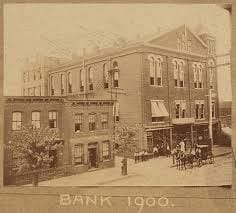
The bank operated initially from Rev. Browne's home at 105 West Jackson Street in Richmond's Jackson Ward district, then moved to the purpose-built True Reformers Hall at 604–608 North Second Street — a three-story building housing the bank, three retail stores, four large meeting rooms, a concert hall, and multiple business offices.
The bank prospered and was the only bank in Richmond able to continue honoring checks during the financial panic of 1893. When every other financial institution in the city was restricting withdrawals or failing entirely, the True Reformers Bank paid out the full value of every account.
This was not an accident.
It was the product of a financial model built on the mutual aid principles that Eliza Allen had been practicing since the 1850s: conservative reserves, community trust, and an organizational discipline that prioritized members' security over institutional growth.
By 1900, the bank was operating in 24 states, owning property valued at $223,500.
The Grand Fountain's operations had expanded to include a newspaper, a real estate agency with 27 buildings and 3 farms valued at $400,000 by 1906, a 150-room hotel described as one of the finest Black hotels in the South, and a 634-acre retirement home.
The Reformers Mercantile and Industrial Association, established in 1899, operated several successful stores generating over $100,000 in annual revenue — approximately $3.5 million today.
The bank collapsed in 1910, brought down by mismanagement under a successor president and a $50,000 embezzlement by the bank's cashier. Rev. Browne had died in 1897.
The institution he and Allen had built survived him by thirteen years before the structural vulnerabilities of undercapitalization and governance failure — the same forces that have ended Black financial institutions across every generation — finally proved fatal.
The True Reformer Building in Washington, D.C. — designed by Black architect John A. Lankford, the first building of its kind to be designed, financed, constructed, and owned by Black residents of the nation's capital — still stands today as a National Historic Landmark.
It was built with the bank's capital.
It outlasted the bank by more than a century.
The Chain She Started
The organizational lineage that runs from Eliza Allen's Petersburg societies through the True Reformers Bank to the modern Black banking tradition is not metaphorical. It is documented.
Maggie Lena Walker, who led the Independent Order of St. Luke — the same organization in which Allen had served as Grand Chief — used that fraternal infrastructure to found the Saint Luke Penny Savings Bank in Richmond in 1903, becoming the first African American woman to charter a bank in the United States.
Walker had watched the True Reformers model from inside the same organizational ecosystem. She built on what Allen and Browne had proven was possible.
The True Reformers Bank's first-day deposit of $1,269.28 in 1889 represents a chain of financial development that runs through Walker's Saint Luke Penny Savings Bank, through the 130-plus Black-owned banks that existed in America by the 1920s, through the historically Black colleges and fraternities that would finance the Civil Rights Movement, and forward to every Black financial institution operating today.
Allen sat at the founding table of the first link in that chain.
She did it as the only woman in the room.
She did it while working as a laundress.
She did it having spent her formative organizational years running secret societies in a slave state where being caught could have ended everything.
The compounding of those three facts — the gender barrier, the economic constraint, the foundational experience of building under maximum restriction — is what makes Eliza Allen not just a footnote to the True Reformers story but its most instructive figure.
What Her Life Teaches
The most durable financial institutions are built on mutual aid, not profit
The True Reformers Bank survived the panic of 1893 because its organizational culture — forged in decades of mutual aid work by women like Allen — prioritized member security over institutional growth. It honored every account in full when other banks could not.
That resilience was not accidental.
It was the direct product of a philosophy that Allen had been practicing since the Sunday afternoon meetings of the Consolation Sisters: put the community's financial security first, and build the institution around that commitment.
Constraint is an organizational teacher with no peer
Allen learned to build financial infrastructure in the most constrained environment imaginable — enslaved, surveilled, legally prohibited from organizing without white permission.
Every structural problem she encountered in freedom — how to maintain member trust, how to enforce dues discipline, how to sustain organizational commitment across distance and time — she had already solved under conditions where failure carried catastrophic personal consequences.
The laundress who co-founded the first Black bank was not working from theory.
She was applying decades of operational experience.
Being the only woman in the room is a position, not a limitation
Allen was the sole woman on the True Reformers Bank charter. She did not become the sole woman because she had been admitted on merit or because the organization was enlightened.
She became the sole woman because she had built the organizational infrastructure that made her indispensable — the Shiloh Fountain, the national Grand Worthy Mistress role, the Petersburg network that predated and enabled the Richmond institution.
Her presence on the charter was the result of a decades-long strategy of making herself structurally necessary. That is a replicable model.
The chain matters as much as the link
Allen's direct legacy was not a surviving institution.
The True Reformers Bank failed in 1910.
The organizational model she helped build seeded Maggie Walker's Saint Luke Penny Savings Bank, the Jackson Ward financial district that Fortune magazine later called the "Black Wall Street of the South," and the broader tradition of Black fraternal banking that financed communities, churches, and eventually the Civil Rights Movement.
Building something that doesn't last is not failure if it trains the people and proves the model that builds what does last.
Titles earned through service are not decorative
Allen served as Grand Worthy Mistress, Grand Chief, Grand Presiding Daughter, and Grand Worthy Governess for Life across multiple organizations simultaneously.
In the fraternal order tradition, these titles were not honorary — they were operational.
They came with responsibility for dues collection, benefit disbursement, chapter governance, and dispute resolution across hundreds of members. Allen's organizational titles were a portfolio of active management positions, each requiring the same financial and administrative skills that she would deploy at the bank's founding table.
The fraternal order movement was Black America's MBA program, and Allen completed it at the highest level.
Yesterday's Architects is a biographical series by The Black Executive Journal honoring the Black and African entrepreneurs, executives, and innovators who laid the foundation before us — the dealmakers, the institution founders, the strategists who created industries and wealth across the diaspora when the odds were designed against them.
For Further Study
The essential scholarly work is Shennette Garrett-Scott's Banking on Freedom: Black Women in U.S. Finance Before the New Deal (Columbia University Press, 2019), which provides the most rigorous and complete treatment of Allen and the women who built the True Reformers' financial infrastructure.
W.P. Burrell and D.E. Johnson's Twenty-Five Years History of the Grand Fountain of the United Order of True Reformers, 1881–1905 (Richmond, 1909) is the primary institutional history and is available in full via the Internet Archive; Allen appears throughout its pages as one of the organization's most consequential leaders.
For the bank specifically, James D. Watkinson's "William Washington Browne and the True Reformers of Richmond, Virginia," published in the Virginia Magazine of History and Biography (Vol. 97, No. 3, 1989), remains the definitive scholarly article.
The Library of Congress's Inside Adams blog published "The True Reformers: The Roots of Black Financial Institutions" (February 2025), which provides a concise and well-sourced overview with links to primary documents.
The True Reformer Building in Washington, D.C., a National Historic Landmark at 1200 U Street NW, was designed by Black architect John A. Lankford and built with True Reformers capital; it is the most accessible physical testament to the organization Allen helped build.
Garrett-Scott's Columbia University Press Blog essay "Five African American Women Pioneers in U.S. Finance" (March 2019) places Allen in the lineage that runs directly to Maggie Lena Walker and beyond.