Yesterday's Architects · The Black Executive Journal™ Williamsburg, Virginia · c. 1735–? · Farming, Laundry & Domestic Services, Legal Advocacy
At a Glance
- Born free around 1735 in Charles City County, Virginia — her freedom inherited from her mother, an Irish indentured servant, under Virginia's matrilineal status law
- Her father Richard Cumbo, a free Black man, fought in the French and Indian War and was granted 50 acres of land in Williamsburg for his service — land Edith would eventually inherit
- Ran a laundry and domestic services business in Williamsburg as one of only a handful of free Black people in the city during the American Revolution
- Farmed her inherited 50-acre property growing corn, barley, wheat, and tobacco — operating as head of household and sole owner of all assets
- Deliberately never married — Virginia law transferred all of a woman's property to her husband upon marriage; Cumbo refused to surrender what she had built
- In 1778, sued a white man named Adam White for trespass, assault, and battery in York County Court — an act virtually unprecedented for a Black woman in colonial Virginia
- Won the case; the court ruled in her favor and awarded damages
- Her son Daniel served alongside George Washington at Valley Forge; her entire male family line — five brothers included — is memorialized at Jamestown as Patriots of the Revolutionary War
- Named a "Nation Builder" by Colonial Williamsburg — the same designation given to Washington, Jefferson, and Patrick Henry
- Her life is taught today in AP U.S. History as a case study in the legal and economic challenges facing free Black Americans during the Revolution
The account book was the first thing people noticed
Whenever actor-interpreter Emily James portrays Edith Cumbo at Colonial Williamsburg — a role she has inhabited for more than a decade — she carries it in her hands.
Not as a prop.
As a statement.
Because Edith Cumbo, free Black woman, laundry operator, farmer, and litigant in 18th-century Virginia, kept accounts. She tracked what she was owed and what she had earned. She knew exactly what her property was worth.
In a colony where nearly every Black face on Duke of Gloucester Street belonged to someone else, that account book was the most radical object a woman like her could hold.
Edith Cumbo was a mixed-race woman born free in 1735 to a free Irish woman and a free African Virginian. The freedom was not a gift — it was a legal inheritance, precise and deliberate. Under 18th-century Virginia law, a child inherited the free or enslaved status of the mother.
Francine Cumbo was free.
Therefore Edith Cumbo was free.
In a society that had spent decades constructing an elaborate legal architecture to keep Black people in bondage, Edith Cumbo entered the world on the right side of a single statute — and she spent the next several decades making sure she stayed there.
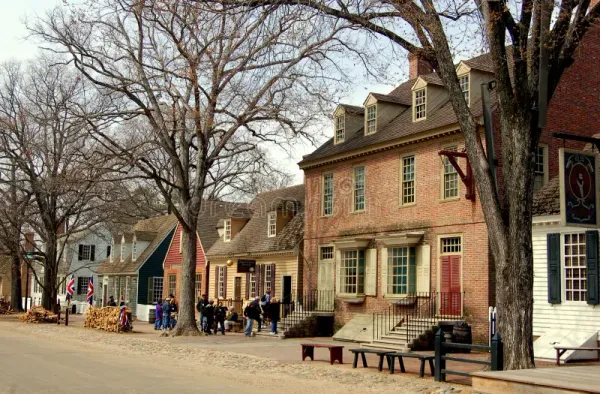
By the late 1770s, Cumbo was one of only a handful of free Black people living within the city limits of Williamsburg.
She ran her own household.
She operated her own business.
She farmed her own land.
When a white man crossed her property line and put his hands on her, she took him to court. In colonial Virginia.
As a Black woman.
And she won.
That is the story.
Now here is what it cost, and what it built.
The Foundation Her Father Laid
Edith's father, Richard Cumbo, a free Black man, fought in the French and Indian War and was granted 50 acres of land in Williamsburg in recognition of his service.
This was not a small thing.
Land grants for military service were a recognized pathway to property ownership in colonial Virginia — but they were overwhelmingly awarded to white men.
That Richard Cumbo received one, and that the grant was honored, placed the family in a rare category: free Black landowners in the Virginia Tidewater with a documented legal claim to real property.
The Cumbo family's military service ran deep.
The names of Daniel Cumbo, John Cumbo, Michael Cumbo, Peter Cumbo, and Richard Cumbo are memorialized on a commemorative headstone in Jamestown, Virginia, dedicated to "Men of Color — Patriots who served in support of our nation's war for independence."
Edith's father served in the French and Indian War.
Her five brothers served in the Revolution. Her son Daniel served at Valley Forge alongside Washington.
The Cumbo family gave the American republic its military labor across two wars — a fact the republic spent two centuries not teaching in its schools.
When her father died, he left his land to his daughter Edith. Fifty acres in Williamsburg, the colony's capital.
It was the economic foundation on which she would build everything else.
The Business She Built — and the Marriage She Refused
By the late 1770s, Cumbo had settled in Williamsburg and was operating as head of her own household — a legal designation that carried specific weight.
She owned more than 50 acres of land where she grew corn, wheat, barley, and a small amount of tobacco.
She also ran a laundry and domestic services business, using the skills of housewifery — washing, pressing, sewing, domestic management — that the era made available to women as legitimate commercial work.
As a free Black woman in the slave society of 18th-century Virginia, Edith Cumbo was independent and resourceful. Those two words — independent, resourceful — carry more weight than they appear to.
In Williamsburg in the 1770s, a city whose entire economic structure rested on enslaved labor, being a free Black woman who ran her own household and her own accounts was not simply unusual.
It was an ongoing, daily act of assertion against a system that had been specifically designed to prevent it.
She never married. Cumbo never married, likely due to 18th-century laws which transferred all property and assets of women to their husbands when they married.
This was a calculated economic decision, not a personal failing. She attracted many suitors — described as a "handsome" woman with means — but she refused every one.
The law was explicit: marriage meant transfer of ownership.
The farm, the business, the account book — all of it would pass to a husband the moment she said yes.
Edith Cumbo understood this, refused it, and remained the sole owner of everything she had built for the rest of her documented life.
This is sophisticated asset protection in the language of the 18th century. She had no attorneys, no trusts, no corporate structures.
She had the knowledge of what the law would do to her property, and she structured her personal life accordingly.
The Lawsuit That Shouldn't Have Been Possible
In June 1778, a white man named Adam White trespassed on Edith Cumbo's property and assaulted her.
Edith Cumbo took Adam White to the York County Court, located in Yorktown, and sued him for trespass, assault and battery. Let the full weight of that sentence settle.
This was colonial Virginia, in the middle of the Revolutionary War.
Virginia law required that Edith pay taxes, yet it also prohibited her from voting or testifying in court against a white person. She paid into the system that denied her its protections.
She was taxed by a government that would not give her the vote. She was subject to laws she had no hand in making.
And yet she walked into the York County Courthouse and filed a lawsuit against a white man for what he had done to her body and her property.
The York County court found in Cumbo's favor and awarded her one shilling in compensatory damages. One shilling. The monetary award was nearly symbolic — but the verdict was not. A free Black woman in colonial Virginia had sued a white man for assault and won.
The court had ruled that her body and her property had value worth protecting under law.
In 1778.
In Virginia.
Cumbo was victorious in court — quite a feat for a woman, much less for a Black woman at that time. She had also, years earlier, been brought before the Halifax County Court accused of having a child out of wedlock — and been found not guilty there too.
The justices dismissed the case "for reasons appearing to the court," meaning the court in Halifax declared Edith not guilty based on the evidence.
Twice charged.
Twice cleared.
In a legal system that had every structural incentive to rule against her.
"I tried to use the character to show it's not the condition you lived and worked under that made you a slave — it's the law," said interpreter Emily James, who has portrayed Cumbo at Colonial Williamsburg for more than a decade. Edith Cumbo understood the law.
She used it when it served her.
She navigated around it when it didn't.
She never pretended it was fair.
The Impossible Choice of the Revolution
The Revolutionary War placed free Black people in Williamsburg in a position of extraordinary moral and strategic complexity that history has consistently underplayed.
During the American Revolution, free Black women like Edith Cumbo had to choose between supporting the Americans or the British. Like many free blacks, Edith had a vested interest in protecting her status, family, relatives, and livelihood.
If she supported the British, she risked losing everything she had accomplished.
Supporting the Americans, though, denied her full and equal rights of free white citizens.
This was not an abstract ideological dilemma.
It was a property calculation under conditions of war. The British had offered freedom to enslaved people who defected to their lines — Lord Dunmore's Proclamation in 1775 promised liberty to any enslaved person who escaped a Patriot household and joined British forces.
For Edith Cumbo, already free, already propertied, the calculus ran differently. Supporting the Americans meant protecting her land and her legal standing in a Virginia court system she had already proven she could use.
It also meant sending her son Daniel to Valley Forge.
Daniel Cumbo, along with John, Michael, Peter, and Richard Cumbo, served with Washington and the Allied Forces. The Cumbo men fought for a republic that would not give Edith the vote or fully protect her in court.
She supported them anyway — because the alternative was the loss of the 50 acres and the account book and everything she had refused to surrender to a husband.
She made a cold-eyed business decision dressed in the language of patriotism, and she made it correctly.
What Her Life Teaches
Freedom is a legal status, not a feeling — know the exact statute that protects you
Edith Cumbo's freedom rested on a single provision of Virginia law: the child of a free mother is free. She knew this.
Her father knew this.
The entire Cumbo family operated with precise awareness of the legal ground under their feet, because in 18th-century Virginia that ground could shift without warning.
Every Black entrepreneur operating in a hostile legal environment carries this same obligation — know the exact rule that protects your position, because no one will enforce it for you unless you force the issue yourself.
Structure your personal life to protect your business assets
Cumbo never married — not because she had no suitors, but because marriage was an asset transfer mechanism she refused to trigger. She read the law, understood its consequences, and made every personal decision accordingly.
In an era without corporate structures, trusts, or legal separation of personal and business assets, the only tool she had was her own choices.
She used them with precision.
Use the legal system when it's available, even when it's rigged against you
Virginia law prohibited Cumbo from testifying against a white person in court — and she sued a white man for assault and won anyway. She found the gap, hired representation, appeared before the court, and walked out with a verdict.
The system was not built for her.
She used it anyway.
The lesson is not that the system was fair.
The lesson is that refusing to engage with it at all is also a choice — one that costs you the victories that are available.
Military service builds generational capital — but only if the family understands what they are owed
Richard Cumbo's 50 acres came from his French and Indian War service.
Daniel Cumbo's Valley Forge service produced no comparable grant. The American republic consistently failed to convert Black military service into the land grants, pensions, and citizenship rights it awarded to white veterans.
The Cumbo family's story is a case study in that specific betrayal — and a reminder that understanding what you are owed, documenting it, and demanding it through every available legal channel is not entitlement.
It is arithmetic.
Edith Cumbo's story was not rediscovered — it was preserved in court records, land grants, and church documents, and eventually restored to public memory through Colonial Williamsburg's deliberate interpretive work.
"She was a smart woman who knew how to use the system and was a leader in her community," said James Horn, then vice president of research at the Colonial Williamsburg Foundation.
The institutions that choose to tell these stories — and the publications that amplify them — are doing more than historical housekeeping.
They are resetting the record of who built this country and what it cost them.
Yesterday's Architects is a biographical series by The Black Executive Journal honoring the Black and African entrepreneurs, executives, and innovators who laid the foundation before us — the dealmakers, the institution founders, the strategists who created industries and wealth across the diaspora when the odds were designed against them.
For Further Study
The most accessible and rigorously sourced entry point is the Colonial Williamsburg Foundation's profile of Cumbo in their Slavery and Remembrance project at slaveryandremembrance.org, cross-referenced with their Nation Builders series.
The primary academic context for understanding her world is provided by Harris, Campbell, and Brophy's Slavery and the University: Histories and Legacies (University of Georgia Press, 2019), which situates Cumbo within the broader landscape of free Black life in colonial Virginia. Paul Heinegg's Free African Americans of Virginia, North Carolina, South Carolina, Maryland and Delaware documents the Cumbo family lineage and their status as free people of color tracing back to the 17th century — available in full at FreeAfricanAmericans.com.
For the legal framework that both constrained and, on occasion, protected women like Cumbo, the University of New Mexico Law Review's 2016 study "The Free Blacks of Virginia: A Personal Narrative, A Legal History" provides precise statutory context.
Cumbo's story is included in Henretta, Hinderaker, Edwards, and Self's America's History, For the AP Course (Bedford/St. Martin's, 2014) — her presence in the AP curriculum is itself a testament to what sustained interpretive work by institutions like Colonial Williamsburg can accomplish.
The Cumbo family website at cumbofamily.com, maintained by descendants, offers genealogical depth and firsthand family oral history that no scholarly source matches for intimacy or detail.