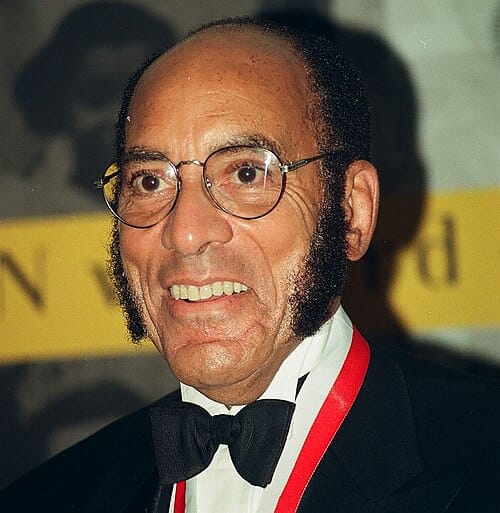

Corporate Stress and the Black Executive: What Has Changed Since 1982?
A 1982 New York Times Magazine feature documented the pressures facing the first generation of Black corporate leaders. Four decades later, representation has improved, but the deeper question remains: have the institutions of corporate power actually changed?


TL;DR
In 1982, The New York Times Magazine published a feature titled “Black Executives and Corporate Stress.” It profiled a small group of Black corporate managers navigating institutions that had only recently opened their doors to them after the Civil Rights era.
The stress they described came not only from the demands of leadership, but from isolation, scrutiny, and the experience of being first inside organizations that had not yet fully adapted to their presence.
Forty-four years later, corporate America looks very different on the surface. Diversity initiatives are common, leadership pipelines have expanded, and Black executives now run major corporations across industries. Yet at the very top of corporate power, representation remains limited.
Today, roughly ten Black executives lead Fortune 500 companies, representing about two percent of the index in a country where Black Americans make up roughly thirteen percent of the workforce. Since the Fortune 500 began in 1955, fewer than thirty Black executives have ever served as CEOs.
A new variable has emerged: the rollback and recalibration of corporate DEI initiatives across the United States. As companies move away from formal diversity frameworks, advancement once again rests primarily on the enduring mechanics of corporate leadership—performance, networks, sponsorship, and institutional trust.
The story that began in 1982 is still unfolding.
Black Executives and Corporate Stress
On a winter Sunday in January 1982, readers of The New York Times Magazine encountered a headline that captured a quiet but important shift taking place inside corporate America:
“Black Executives and Corporate Stress.”
The article did not focus on civil rights protests or public policy debates. Instead, it turned its attention to a relatively small group of professionals—Black managers who had entered corporate leadership during the years following the Civil Rights movement.
These executives were not activists or political figures. They were division heads, regional managers, financial officers—people responsible for sales targets, personnel decisions, and operational strategy.
But their experiences revealed something deeper about the institutions they worked inside.
Corporate America had begun opening its doors in the decades after the Civil Rights Act of 1964. Recruiting pipelines widened, universities expanded access, and companies began bringing Black professionals into management ranks in greater numbers than ever before.
Yet entry into the system did not necessarily mean full integration into the culture of corporate leadership.
The executives interviewed in the 1982 article described a particular kind of pressure: the experience of operating inside institutions that had changed legally but were still evolving culturally.
Many spoke about isolation. Some were the only Black manager in their department, sometimes the only one in an entire division.
Others described a constant awareness that their performance might be interpreted as representative of something larger than themselves.
The stress they described was not always visible. But it was persistent.
And it reflected the experience of being first.
The First Generation of Corporate Pioneers
The executives profiled in the 1982 article belonged to a generation that entered corporate America during a transitional moment in American history.
The Civil Rights movement had reshaped legal frameworks governing employment and education. Companies that had once been overwhelmingly homogeneous began slowly expanding recruitment to include candidates from a broader range of backgrounds.
By the late 1970s, a new cohort of Black professionals had begun moving into managerial roles.
Yet the numbers remained small.
At the time the article was published, no Black executive had ever led a Fortune 500 company. Representation at senior leadership levels was minimal, and the informal networks that often guided executive advancement had been built long before these professionals arrived.
Corporate advancement has always relied heavily on relationships—mentors, sponsors, advocates who help guide careers through complex organizational structures.
For many of these early executives, those networks were thin or nonexistent.
They were navigating institutions whose internal culture had been shaped over decades by a relatively narrow set of experiences.
The architecture of corporate leadership had not been designed with them in mind.
The Hidden Work of Cultural Navigation
The most interesting insight in the 1982 article was not about discrimination in the traditional sense.
By that point, many corporations were actively attempting to expand diversity within their management ranks. Hiring practices had begun to change, and companies increasingly recognized the importance of recruiting talent from across the workforce.
Yet the executives still described a unique psychological strain.
They spoke about constant visibility—a sense that they were being observed not only as individuals but as representatives of a broader group.
They also described something that would later become widely known as code-switching.
In order to succeed within corporate environments, many felt compelled to adapt aspects of their behavior—speech patterns, communication styles, even emotional expression—to align with the prevailing culture of their organizations.
These adjustments were often subtle, and in many cases voluntary.
But over time they created tension between professional identity and personal authenticity.
The executives in the article rarely framed this as resentment. Instead, they described it as a form of navigation—a necessary skill for operating effectively within institutions whose norms had been shaped by different historical experiences.
Still, the cumulative effect produced stress.
Not the stress of leadership alone, but the stress of operating across cultural boundaries every day.
The Corporate Landscape Today
More than four decades later, the corporate environment looks dramatically different on the surface.
Diversity initiatives have become common across major corporations. Leadership development programs now exist in nearly every large organization. Companies publish annual reports detailing their progress on inclusion and representation.
Business schools graduate thousands of Black MBA candidates each year, and executive search firms regularly emphasize leadership diversity when presenting candidates to boards.
The language of diversity has moved from the margins of corporate discourse to the center.
And yet, the highest levels of corporate leadership tell a more complicated story.
Today, approximately ten Black executives lead Fortune 500 companies.
This represents meaningful progress compared to 1982, when the number was zero.
But it also represents roughly two percent of the Fortune 500, in a country where Black Americans make up about thirteen percent of the population and workforce.
The historical perspective is even more striking.
Since the Fortune 500 list began in 1955, fewer than thirty Black executives have ever served as CEOs of those companies.
Across seventy years of corporate history, the total number could comfortably fit around a single boardroom table.
Progress has occurred. But it has been gradual.
The Narrowing Pipeline
Understanding why requires examining how corporate leadership develops.
Executive careers rarely follow sudden trajectories. Most CEOs spend decades moving through successive levels of management, accumulating operational experience and building relationships across their organizations.
At each stage of this process, the pipeline narrows.
Entry-level positions feed into supervisory roles. Supervisors become middle managers. A small subset advances into senior leadership, and from that group an even smaller number eventually reaches the C-suite.
Data across multiple industries shows that while Black professionals are well represented in entry-level roles, representation declines at early promotion stages.
The first managerial promotion often becomes a critical turning point.
If advancement slows at that stage, the effects compound over time. By the time organizations reach senior leadership levels, the candidate pool has already narrowed significantly.
Corporate boards rarely appoint CEOs from outside this ecosystem. Leadership roles typically go to individuals who have spent decades developing operational expertise within large organizations.
If representation is limited earlier in the pipeline, the executive class inevitably reflects those limitations.
Networks of Influence
Another dynamic identified in the 1982 article remains central to understanding corporate leadership today.