Beyond the Pitch Deck: How Kim Lewis and Dawn Dickson Rewrote the Rules of Growth Capital
The Black Executive Journal™ — Today's Builders

– 20 min read


The Black Executive Journal™ — Today's Builders
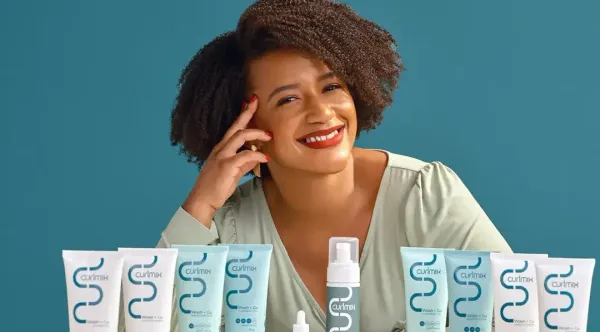
Kim Lewis turned a public survival plea into a comeback. The CurlMix founder hit her 20,000-order target before December 31, 2025, paid off roughly $500,000 in debt, and added four new jobs — proof that a community-funded brand can mobilize capital faster than any institutional bridge round.
Dawn Dickson built the blueprint. As the first female founder globally to raise more than $1 million via a Regulation Crowdfunding secure token offering, Dickson raised a cumulative $6 million from more than 10,000 investors in three rounds — all while retaining the founder-controlled cap table that institutional backers would never have permitted.
The numbers are systemic, not personal. Black founders received just 0.4% of all U.S. venture capital in 2024 — down more than two-thirds from the post-George Floyd peak three years prior — making the community-ownership model these women pioneered not a workaround but a structural alternative.
There is a particular kind of confidence required to build a company when the scoreboard is rigged against you — and then to do it in public, with no safety net, in front of the people who believed in you with their own money.
Kim Lewis and Dawn Dickson possess that confidence.
They built it not in boardrooms or on Stanford campus walks, but in Chicago's South Side and Columbus, Ohio — cities that the venture capital map tends to treat as flyover country. They are not household names in Silicon Valley.
They are something more consequential: the founders who demonstrated, with verified numbers and SEC filings, that community capital is not consolation funding.
It is a strategic instrument.
Their stories are different enough to resist easy comparison and similar enough to demand it. Lewis built a clean beauty brand with the cultural gravity of a movement.
Dickson built an AI-powered retail technology company in a hardware-intensive category that VC firms chronically underfund.
Both arrived at the same crossroads — an institutional funding market that would not meet them on fair terms — and both chose the same road out.
In the spring of 2013, Kim Lewis quit a six-figure logistics job on Chicago's South Side with no savings and no exit plan. The idea that consumed her was deceptively simple: organic, clean haircare products made for women who had always been afterthoughts in the beauty aisle.
The vision she could not let go of was bigger — a Black-woman-owned beauty conglomerate, traded on a public exchange, generating generational wealth inside the community that built it.
She and her husband Tim, whom she had known since second-period gym class at Morgan Park High School, started CurlMix in 2015 as a do-it-yourself subscription box.
The product that changed everything was a flaxseed gel that customers were already mixing themselves.
In January 2018, Lewis pivoted the company from subscription kits to a finished four-step Wash and Go System — and reached $1 million in annual sales within 12 months.
Then came the tank.
On March 3, 2019, Season 10, Episode 14 of Shark Tank aired with CurlMix as a featured pitch. The Lewises walked in asking $400,000 for 10% equity. Robert Herjavec was in. He offered $400,000 — for 20%.
The couple countered at 15%.
Herjavec would not move.
The Lewises walked.
It is one of the most cited rejections in the show's history, and in hindsight, one of the most financially sophisticated decisions any founder on that stage has ever made.
What followed was a run that even the most skeptical investor would have to respect. Forbes 30 Under 30 in 2020. Oprah's Favorite Things 2020.
The #93 spot on the Inc. 5000 list in 2021 — top 100 among all privately held U.S. companies. Distribution expanding into Ulta Beauty, eventually reaching more than 460 stores. Lifetime revenue surpassing $32 million, nearly all earned online.
All of it built without giving Robert Herjavec his 20%.
Before she made history, Dawn Dickson watched a VC firm lose confidence in her company over a stolen prototype, an empty bank account, and $50,000 they refused to advance — even after putting in $500,000 — because they had decided she was a diversity checkbox, not a bet.
That moment crystallized something Dickson had been sensing for years.
She had spent more than a decade building cash-flow-positive companies, completing Techstars LA in 2017, earning coverage from Forbes, Inc., and Fast Company, and winning pitch competitions on stages where she was reliably the only Black woman in the room.
She had accomplished more with less than most of the founders getting Series A term sheets she could never close.
PopCom — the automated retail technology company she built to make vending machines as data-intelligent as e-commerce platforms — was her best bet yet. It used AI, facial detection, and sales analytics to give brick-and-mortar retailers the same conversion intelligence that Shopify gave online sellers.
The market was obvious.
The TAM was real.
The institutional checkbooks stayed closed.
When Dickson pivoted to equity crowdfunding in 2019, she did not do it reluctantly. She did it with the precision of someone who had studied the rules and decided to rewrite them.
Her first Regulation Crowdfunding campaign on StartEngine raised the $1.07 million maximum then permitted under Reg CF — making her the first female founder globally to surpass $1 million via a secure token offering under the JOBS Act.
She came back in 2020. That second StartEngine campaign raised $1.3 million — more than the Reg CF cap from the prior year — in 47 days. And then she went bigger. A Regulation A+ offering followed, allowing companies to raise up to $75 million from the public with full SEC qualification.
When the final round closed, Dickson had raised approximately $6 million from more than 10,000 investors across three crowdfunding rounds.
Ten thousand people who believed in her when the VCs would not.
Ten thousand people who became her most effective evangelists.
On paper, both Lewis and Dickson look like exactly the kind of founders institutional investors claim to prioritize.
University of Illinois graduate with a background in logistics and marketing, running a manufacturing company in her own neighborhood with demonstrated eight-figure lifetime revenue, product-market fit across 260,000 customers, and margins that consumer brands routinely use to justify premium valuations.
Serial entrepreneur with more than 20 years of experience across technology and business development, multiple cash-flow-positive exits, a Techstars program graduate, congressional testimony on blockchain technology, and a proven track record of raising capital across traditional and non-traditional channels.
What both encountered was a system that made its decisions on pattern — and neither of them matched the pattern.
Dickson has described the dynamic in unflinching terms: investors who had already committed capital found reasons not to double down.
A later Series A process collapsed amid what she has publicly described as malicious conduct from an investor and board member, compounded by a market downturn.
Lewis has noted that the difference between getting funded and not funded often has less to do with business performance than whether investors "feel like they know your market" — and see themselves in you.
The data is unambiguous.
Black founders received just 0.4% of all U.S. venture capital in 2024, per Crunchbase — the lowest share in years, and down more than two-thirds from 2021.
The median seed round for a Black female founder is approximately $125,000; the national average is $2.5 million. Women-only founding teams captured roughly 2% of global VC in 2024.
For Black women specifically, access is a fraction of even that figure.
For executives trained to read income statements, the conclusion is not subtle: the gap is not a function of business quality.
It is a function of who is writing the checks.
Faced with that ceiling, both founders made a similar and radical decision: if institutional investors would not value their companies appropriately, they would let their communities decide.
In 2019, Dickson launched PopCom's first Regulation Crowdfunding campaign on StartEngine.
The result was historic: she raised the $1.07 million maximum then permitted under Reg CF — oversubscribed — making her the first female founder globally to reach $1 million via a secure token offering under the JOBS Act.
She returned in 2020, raising $1.3 million in 47 days through a second fully subscribed campaign. Then she upgraded the instrument: PopCom moved to a Regulation A+ offering, the more complex SEC-qualified exemption that allows raises of up to $75 million from the public.
By the time all three rounds closed, Dickson had raised approximately $6 million from more than 10,000 investors.
For a founder who had given up 8% of her company for a $30,000 check at one early stage, this was not just creative fundraising. It was deliberate cap table strategy.
Crowdfunding allowed her to bring in growth capital without ceding board control, turn customers and believers into shareholders, and prove market demand in real time to any future institutional investor watching.
As she has put it, the 10,000 investors in PopCom became the company's best marketing — not just its balance sheet.
Lewis watched this shift happen and made her own move. In April 2021, she and Tim launched a Regulation Crowdfunding campaign on WeFunder. The community did not wait.
CurlMix hit $1 million in commitments within the first four hours of going live.
After five months, the campaign closed at $4.5 million from nearly 7,000 investors — one of the largest Reg CF raises by a Black-owned beauty brand, and one that broke a WeFunder record for investor engagement with 3,962 campaign comments.
This was possible because of a structural regulatory shift that Lewis had positioned herself to capitalize on.
When Reg CF first launched in 2016, companies could raise no more than $1.07 million per year. On March 15, 2021, the SEC raised that ceiling to $5 million. CurlMix became one of the first high-profile Black-owned brands to operate at that new scale.
Lewis returned to WeFunder in 2024, raising an additional $5.7 million from 9,248 investors. Combined across both crowdfunding rounds, CurlMix has raised more than $10 million directly from its community — a figure that includes the brand's most loyal customers, now co-owners with a financial stake in its success.
Lewis has been explicit about the philosophy: customers should own a piece of the brands they build.
Equity crowdfunding turned CurlMix's buyers into co-owners with both a voice and a stake — and turned a beauty company into a community institution.
For Black executives, the critical insight is that these women were not "getting creative" because they were shut out.
They were redesigning their capital stacks — deliberately, legally, and with precision.
Equity crowdfunding — whether Reg CF or Reg A+ — sits alongside institutional capital, not beneath it. It allows founders to:
For Lewis, it meant using crowdfunding as true growth equity: capital to fund marketing, inventory, and team expansion that would otherwise have required highly dilutive institutional rounds or risky debt.
For Dickson, it meant keeping PopCom's destiny in her own hands. "That was the first time I really felt like my company's future was in our hands," she has said.
Many Black executives have watched founders lose control of their own companies through successive dilutive rounds.
Dickson has openly reflected on early cap table missteps and how they shaped her approach to crowdfunding.
The contrast is stark:
| Metric | Institutional Path (Typical) | Community Crowdfunding Path |
|---|---|---|
| Board control | Often transferred to lead investor at Series A | Retained by founder |
| Governance risk | Concentrated in 1–3 institutional funds | Distributed across thousands of investors |
| Alignment | Financial return-driven, often time-boxed | Values-aligned, brand-identified |
| Minimum investment | Accredited investors only ($50K+) | Non-accredited investors welcome ($100+) |
| Investor base | Narrow | Broad, diverse, community-representative |
By rejecting Herjavec's terms on Shark Tank and structuring crowdfunding rounds deliberately, Lewis and her husband preserved majority ownership in CurlMix while raising institutional-sized capital from the public.
Dickson built an investor base spanning 50 states and 14 countries — none of whom had board-level veto rights over the company she built.
None of this is risk-free — for founders or investors. Equity crowdfunding creates:
The risk profile is different from traditional VC, not absent.
Instead of being overexposed to a single fund's agenda, founders spread governance risk across a larger community and retain ultimate decision-making authority.
For investors — including Black executives considering participation in these rounds — the illiquidity is real. Secondary markets for crowdfunded securities are early-stage.
The expectation should be a 5–10 year hold, with no guarantee of a structured exit.
What the model offers in return is alignment: capital betting simultaneously on financial returns and the social value of having Black-led, community-funded companies operating at scale.
The end of this story is not a clean triumph narrative.
Both Dickson and Lewis are transparent about the cost of choosing this path, and that transparency is itself part of the lesson.
By late 2025, despite years of revenue growth, a historic crowdfunding campaign, and placement in more than 460 Ulta stores, CurlMix found itself squeezed by compounding pressures.
Tariffs hit margins.
Ingredient costs spiked.
Mass retail timelines clashed with small-business cash cycles. Lewis cut her team from approximately 40 employees to 14.
Then she did something that few founders — and almost no Black women — are allowed to do without judgment: she publicly asked for help.
Through Instagram posts, livestreams, and social content amplified under the hashtag #ProtectCurlMix, Lewis laid out the numbers and asked her community to place 20,000 orders before December 31, 2025, or face closure.
In traditional VC terms, that kind of vulnerability is often weaponized.
In a community-ownership model, it is part of the social contract.
The community answered.
By January 2, 2026, CurlMix had hit its 20,000-order target. Lewis announced she was able to pay off approximately $500,000 in debt, add four new positions to the team, and set aside operating capital to carry the business through the first quarter of 2026.
The campaign added roughly 10,000 new customers to the brand's base. Lewis set her 2026 goal at 100,000 orders — five times the crisis threshold.
"The hard part begins," she acknowledged. She is not wrong. But she is still here — because 20,000 people showed up.
Dickson's road has been equally complex.
After the high of her crowdfunding milestones, a failed Series A process, internal conflicts, and the broader tech downturn forced her to downsize aggressively, store machines, and ultimately step down as CEO of PopCom in April 2023.
She has since channeled the knowledge and capital from PopCom into real estate development across Ghana and Rwanda, where she has facilitated more than $10 million in property sales as of 2024 — including the Oasis Beach Resort in Cape Coast, Ghana.
She is building luxury rammed-earth homes, training local Ghanaian artisans in sustainable construction, and investing in land near the new airport being constructed in Rwanda.
PopCom itself continues to operate, with Dickson's profile still active on its platform and a new round of investment open to the public in 2025 as the company signals an AI-powered retail relaunch.
In candid reflections, she has acknowledged that being a highly visible, pioneering case study came with personal and professional strain she did not fully anticipate.
"I gave up the idea that anything would ever be easy," she has said. "Nothing is easy. But I can still be grateful."
None of this negates the magnitude of what she built.
It underscores that equity crowdfunding is not a magic wand — it is an instrument deployed inside an economy that still systematically undervalues Black women's labor and leadership.
For readers of The Black Executive Journal, the question is not whether to celebrate these women.
It is what to take from their experience as founders, investors, and stewards of capital.
Both founders leaned heavily on the communities they had nurtured — customers, followers, and professional networks.
That social capital translated directly into financial capital when the time came to crowdfund.
Know, from day one, what percentage of your company you want to own after each major round. Understand pre-money vs. post-money valuations, liquidation preferences, and board rights.
Dickson has been explicit about early cap table missteps and how expensive they were to correct.
Lewis has repeatedly named sound working capital management as a prerequisite for crowdfunding success — not an afterthought.
Raising a round is not the same as building a financially healthy business.
Reg CF and Reg A+ can complement — not exclude — grants, revenue-based financing, traditional loans, and strategically negotiated growth equity.
For Black executives with investable capital, equity crowdfunding offers access to Black innovation portfolios at minimums as low as $100 per deal.
This is portfolio construction, not charity.
These founders need governance expertise, distribution partnerships, vendor introductions, and talent referrals as much as they need checks.
Equity crowdfunding allows investors to offer both capital and concrete operational value, even without board seats.
Black-owned and Black-focused platforms such as Seed at the Table, FundBlackFounders, and The 10K Project are building the infrastructure that makes community capital possible at scale.
Joining, amplifying, or partnering with them is a leverage play.
Investing in Black women-led companies is not charity.
Studies of crowdfunding outcomes increasingly show that underrepresented founders are a mispriced asset class — not a risky one by default.
At the center of both stories is a question that balance sheets cannot fully answer: What does legacy look like when Black women control their cap tables?
Kim Lewis's fight to protect CurlMix — and her community's response — is about more than a single brand.
It is a demonstration, visible in real time, that a community-funded company can survive macroeconomic shocks, structural headwinds, and the kind of pressure that normally forces Black founders into distressed-equity deals or quiet closures.
She proved that the social contract of community ownership runs both directions.
Dawn Dickson's arc — from vending technology to African real estate and diaspora development — illustrates another dimension of legacy entirely: using the knowledge, capital, and credibility earned in one pioneering venture to build assets on the African continent and create long-term wealth for Black communities globally.
The $6 million she raised from 10,000 investors was not the end of the story.
It was the foundation of the next one.
For Black and African executives, the call to action is twofold:
As builders — to consider whether community ownership, equity crowdfunding, and alternative capital structures belong in your next venture's strategy from the very first pitch, not as a fallback after institutional rejection.
As investors and leaders — to move beyond applause into participation.
Write checks.
Join advisory boards.
Partner with platforms.
Normalize Black-led, community-funded companies as serious players in the growth-equity landscape.
The rules of growth capital are being rewritten in real time — often by Black women who were never supposed to have a pen in their hand.
Black Enterprise. (2025, November 3). “CurlMix Founder Launches Community Campaign To Save Business.” Retrieved from https://www.blackenterprise.com/curlmix-closure-founder-community-campaign/
Black Pages International. (2025, December 2). “CurlMix Is Fighting for Its Future — and the Community May Be the Key to Saving It.” Retrieved from https://www.muzilogwoman.com/post/curlmix-is-fighting-for-its-future-and-the-community-may-be-the-key-to-saving-it
Brookings Institution. (2024, September 17). “How to fund Black businesses during a DEI backlash.” Retrieved from https://www.brookings.edu/articles/how-to-fund-black-businesses-during-a-dei-backlash/
CurlMix. (2019, November 10). “The CurlMix Story Part 1: We started in a storage unit and grew a multi-million dollar business.” Retrieved from https://curlmix.com/blogs/curlmix/the-curlmix-story-part-1
CurlMix. (2020, February 14). “Making Black History.” Retrieved from https://curlmix.com/blogs/curlmix/curlmix-making-black-history
CurlMix. (2025, November 27). “CurlMix was just on the news and yes, it’s true. We may close by December 31st.” Facebook video. Retrieved from https://www.facebook.com/curlmix/videos/
Davis, M. (2025, November 3). “CurlMix in Crisis: Black-Owned Hair Brand Faces Survival Challenges.” Baller Alert. Retrieved from https://balleralert.com/profiles/blogs/curlmix-in-crisis/
Dickson, D. (2024, August 22). “It’s always bittersweet talking about my fundraising journey.” LinkedIn. Retrieved from https://www.linkedin.com/posts/dawndickson_its-always-bittersweet-talking-about-my-activity-7232733321296838656-Vg3y
Dickson, D. (2021, May 31). “About Dawn.” Retrieved from https://dawndickson.me/bio/
Dickson, D. (2023). “PopCom Team.” Retrieved from https://www.popcom.shop/team-members/dawn-dickson
Dickson, D. (2025, February 22). “Dawn Dickson: Inventor Changing How Women Wear Heels.” Inventing Women. Retrieved from https://inventingwomen.com/story-of-dawn-dickson-the-inventor-changing-the-way-women-wear-heels/
Egbuna, T. (2025, January 8). “Only 2.2% of VC funding went to women founders in 2024. Black women founders received even less.” LinkedIn. Retrieved from https://www.linkedin.com/posts/toby-egbuna_only-22-of-vc-funding-went-to-women-founders-activity-7283120350727438337-oJCp
Event Noire. (2025, November 18). “CurlMix Launches ‘Protect CurlMix’ Campaign as Brand Faces Industry Challenges.” Retrieved from https://blog.eventnoire.com/curlmix-launches-protect-curlmix-campaign-as-brand-faces-industry-challenges/
FF.co. (2025, July 23). “Women in VC & Startup Funding: Statistics & Trends (2025 Report).” Retrieved from https://ff.co/women-funding-statistics-2025/
Forbes. (2023, February 20). Reid, P. E. “How Five-Time Founder Dawn Dickson Is Helping Fellow Entrepreneurs Gain More Equitable Access to Capital.” Retrieved from https://www.forbes.com/sites/pauleannareid/2023/02/20/how-five-time-founder-dawn-dickson-is-helping-fellow-entrepreneurs-gain-mo
Forbes. (2025, November 10). Rojas, A. “How Can Women of Color Entrepreneurs Fund Big Ideas Without VCs?” Retrieved from https://www.forbes.com/sites/alejandrarojas/2025/11/11/how-women-of-color-entrepreneurs-fund-big-ideas-without-vcs/
Global Black Women. (n.d.). “Access to Capital: Financial Resources and Funding Opportunities for Black Women-Owned Businesses.” Retrieved from https://globalblackwomen.org/access-to-capital-financial-resources-and-funding-opportunities-for-black-women-owned-businesses/
Global Cosmetics News. (2025, November 11). “CurlMix Launches #ProtectCurlMix Campaign as Founder Seeks 20,000 Orders to Avoid Closure.” Retrieved from https://www.globalcosmeticsnews.com/curlmix-launches-protectcurlmix-campaign-as-founder-seeks-20000-orders-to-avoid-closure/
Harper’s Bazaar. (2021, July 27). “Women of Color Use Equity Crowdfunding to Achieve Success in Tech.” Retrieved from https://www.harpersbazaar.com/culture/features/a35984533/women-of-color-tech-industry-equity-crowdfunding-venture-capital/
HubSpot for Startups. (2024, December 31). “Dawn Dickson of PopCom: StartEngine and PopCom Partner Stories.” Retrieved from https://www.hubspot.com/startups/stories/partners/startengine-popcom
HubSpot. (2024, May 5). “She turned down Shark Tank and built a $32 MILLION empire.” YouTube. Retrieved from